
Free No Sew Amigurumi Patterns You’ll Love to Crochet
Table of Contents
Imagine creating something special for a little one. These free crochet baby booties suit beginners and experienced crocheters. Their simple construction and basic stitches create a heartfelt gift or charming baby shower addition.
The right materials play an important role in these crochet patterns for beginners. Choose soft, washable yarn for baby comfort and practical everyday wear. Before gifting your creation, check the fit to ensure the booties feel snug yet comfortable.
These instructions cover materials, stitch instructions, bootie construction, and sizing. You will also learn about finishing touches, washing, and ideas for future projects. Crocheting lets you express creativity, but always supervise babies wearing crocheted items and avoid loose embellishments.
Introduction to No Sew Amigurumi Patterns
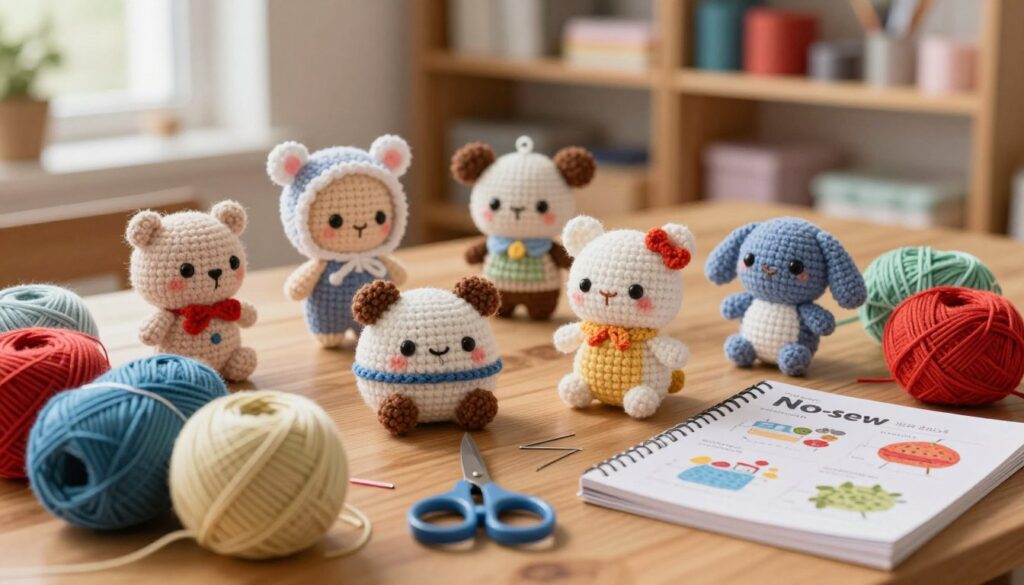
Discover how no sew amigurumi patterns can improve your crochet experience. These patterns reduce or remove sewing between separate crocheted parts, making them ideal for beginners and intermediate crocheters.
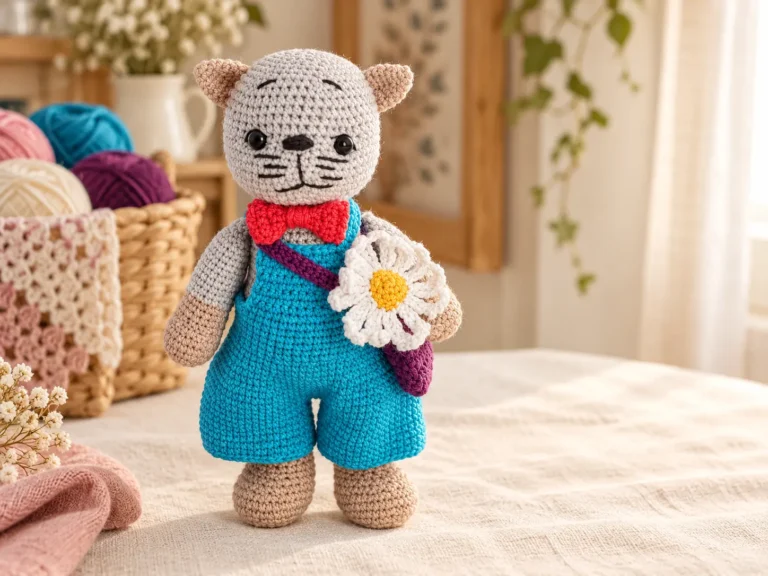
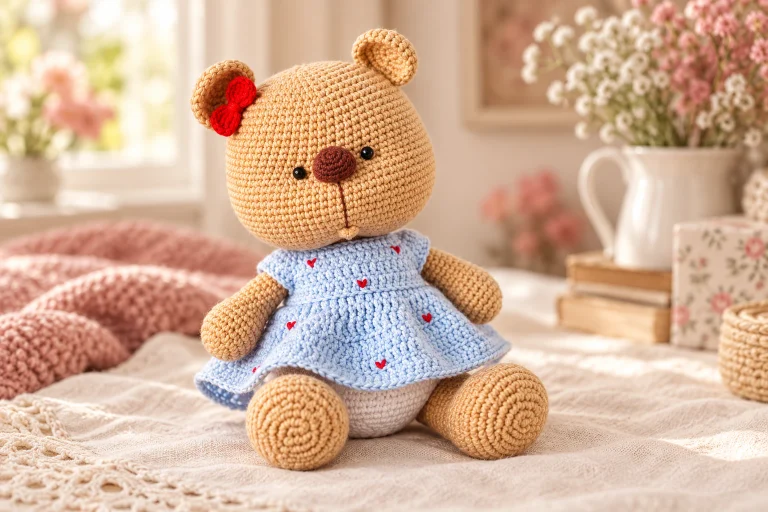
Amigurumi is a Japanese-inspired craft that involves crocheting or knitting small stuffed figures. No sew amigurumi patterns offer great versatility. You can use these techniques to make cute stuffed animals or practical items like baby booties.
“No sew” does not always mean zero finishing. You may still need to weave in yarn ends or attach small decorative features. These patterns offer several important benefits:
- Fewer loose seams: This leads to a cleaner and more polished look.
- Faster assembly: Spend less time sewing and more time enjoying your creations.
- Less intimidating for new crocheters: Simplified techniques can boost your confidence.
This tutorial suits beginners with clear instructions that guide each step. Intermediate crocheters can experiment with shaping, color changes, and decorative details for personal expression.
In summary, no sew amigurumi patterns can build your crochet skills while creating beautiful, useful items. Enjoy their ease and creativity as your projects flourish.
Materials You Will Need
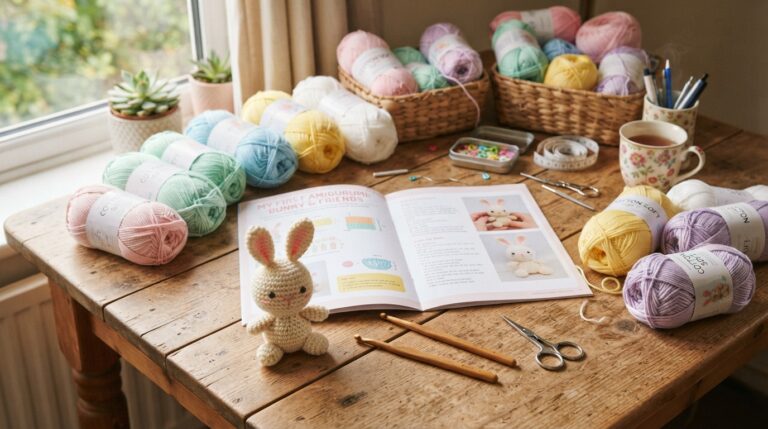
Having the right supplies helps you craft adorable baby booties. Before starting, review the essential materials used in easy amigurumi patterns.
Choose soft, machine-washable yarn that suits a baby’s sensitive skin. Worsted-weight and DK-weight yarns offer comfort and durability.
Smooth acrylic, cotton, and cotton-blend yarns work well. Their clear stitches help beginners, while fuzzy fibers can hide bootie shaping.
Your bootie size depends on yarn weight, hook size, and tension. A smaller hook can make denser fabric. Choose a hook that creates comfortable, even stitches instead of following size advice blindly.
Your comfort and ease matter most.
Besides yarn and a hook, gather these supplies for easy amigurumi patterns:
- A yarn needle for weaving in ends
- Scissors for cutting yarn
- Stitch markers to keep track of your progress
- A measuring tape for checking sizes
- Optional: Stuffing, if your design requires it
Beginners should gather all materials before starting. Intermediate crocheters should make a gauge swatch when changing yarn or hook sizes. This helps ensure your booties turn out just right for easy amigurumi patterns.
Basic Stitches for Baby Booties
Learning a few key stitches can improve your crochet skills for baby booties. These stitches form the base and fabric for your project. You will use three basic stitches throughout these crochet patterns for beginners.
The first stitch to learn is the chain stitch. It starts your crochet work, so keep steady tension as you make each chain. Tension affects sole length and flexibility: a tight chain makes a stiff sole, while a loose chain creates uneven edges.
Next is the single crochet, the main stitch for a firm, warm fabric. Insert your hook into a stitch, yarn over, and pull up a loop; yarn over again and pull through both loops. This tight weave keeps little feet cozy.
Finally, the slip stitch joins and finishes your work. This low-profile stitch closes rounds, creates a neat edge, and gives booties a polished look. Insert your hook into the stitch, yarn over, and pull the yarn through the stitch and loop on your hook.
As you practice, count your loops and learn to recognize the top of each stitch. Working in the correct part preserves your project’s structure. Beginners using crochet patterns for beginners should practice on a small swatch, while intermediate crocheters should keep steady tension for matching booties.
Step-by-Step Instructions for Baby Booties
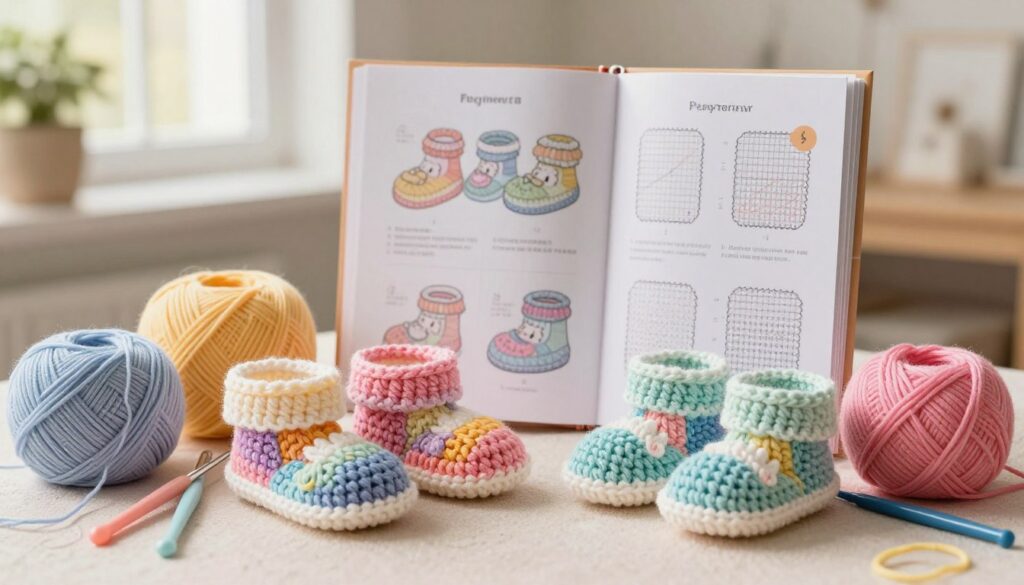
Making baby booties can be a joyful project. These amigurumi tutorials offer clear steps for each stage. Follow them carefully to finish a lovely pair in no time.
- Start with the Sole: Begin by forming a foundation chain. Make sure to create an oval shape by placing stitches evenly at both ends. This is crucial for the booties to fit comfortably.
- Build the Bootie Body: Work additional rounds to shape the body of the bootie. Pay attention to the toe and heel areas. You can achieve the desired shape by using strategic decreases or adjusting stitch placement according to your pattern.
- Observe the Curvature: As you crochet, the fabric will start to curve upward. It’s important to frequently compare the developing bootie with the baby’s foot to ensure a proper fit.
- Add the Cuff: Finish off your booties with a cuff. You have several options here: a simple single-crochet border, a ribbed effect, or a folded edge. Choose what suits your style best!
While working, mark the first stitch of every round to track your progress. Also, count stitches after each increase or decrease to keep your work consistent.
To match size and tension, make the second bootie right after the first. This makes it easier to copy the same style and fit.
Follow these steps to make beautiful, handmade baby booties that people will cherish. These amigurumi tutorials can help you enjoy every stitch. Happy crocheting!
Customizing Your Baby Booties
You can customize your baby booties with simple DIY crochet projects that feel unique and personal. Beginners and intermediate crocheters can add flair without changing the basic construction.
Try classic color pairs like cream and dusty blue, blush and gray, or natural beige with a contrasting cuff. These colors can match any nursery theme or handmade gift set. Choose shades that suit your style or the baby’s parents’ preferences.
Adjust the size by changing the yarn weight, hook size, or foundation chain length. Adding extra rounds can help, but a sole that is too large may become wider, not longer. Test changes against the intended foot measurement for a good fit.
For decoration, try surface crochet for texture, contrasting trim for interest, or small embroidered details. These DIY crochet projects can include a simple crocheted flower attached securely outside.
Safety is paramount. Avoid buttons, beads, bells, ribbons, or other detachable pieces on items intended for babies. These items can pose choking hazards, so keep your designs simple and safe.
Advanced Techniques in No Sew Amigurumi
As you explore no-sew crafts, advanced techniques can make simple projects look stunning. They also improve your crochet skills.
To join a new color, complete your previous stitch’s final yarn-over with the new yarn. This creates a smooth color change. Then secure and weave in the ends discreetly for a polished finish.
Smooth edges are vital in no-sew amigurumi. Keep steady tension throughout your work. Use careful slip stitches and invisible-style joins where needed, but do not pull rounds too tightly, or puckering may occur.
Stitch markers help with continuous rounds by identifying the first stitch. They prevent accidental increases or skipped stitches. Intermediate crocheters can use removable markers to track shaping points and color changes.
Beginners should know these tools and techniques are optional learning steps that become easier with practice.
| Technique | Description | Benefits |
|---|---|---|
| Color Joining | Finish the last yarn-over with a new color. | Creates seamless transitions between colors. |
| Smooth Edges | Use consistent tension and slip stitches. | Reduces visible seams and puckering. |
| Stitch Markers | Mark the first stitch in rounds. | Prevents missed stitches and aids in shaping. |
Using these advanced techniques in your no-sew amigurumi projects can improve their quality and build your crochet confidence. Practice makes perfect, and each project lets you refine your skills.
Common Mistakes to Avoid
When crocheting baby booties, beginners often face common problems. Knowing these mistakes helps you fix issues before they harm the finished pair. Here are frequent challenges and ways to overcome them.
Tension issues can affect your booties. Tight stitches can make the fabric stiff and too small. Loose stitches may create gaps and leave the booties without enough structure. Practice until you find a comfortable grip on your hook.
Another common mistake involves stitch counts. Missing increases, using the wrong stitch, or adding stitches at the join can make booties uneven. Count each round, check the expected total, and correct mistakes before continuing.
Finally, gauge matters, especially when you replace yarn or hooks. Two crocheters can use the same materials yet make different sizes. Make a small swatch, measure stitches and rows, then adjust your hook size so the pattern fits.
Remembering these mistakes can build your skills and help you create beautiful beginner amigurumi designs with confidence.
Tips for Perfecting Your Booties
Perfecting crochet booties can be an enjoyable journey with the right tips. Beginners and intermediate crocheters can improve their results with simple strategies. These ideas also help with easy amigurumi patterns.
Practice a few rows before your final project to check for tight, loose, or uneven stitches. Even tension matters more than speed, so hold the yarn comfortably and let the hook move naturally. This reduces hand fatigue and creates consistent stitches.
Tools can also make crocheting easier. Use a stitch marker to track rounds and a row counter to monitor progress. A pencil or printed checklist can record completed rounds, increases, decreases, and color changes, especially when using easy amigurumi patterns.
Compare the two booties often as you crochet. This helps you find size differences early instead of waiting until the end. Beginners should complete one consistent round at a time, while intermediate crocheters can refine symmetry and match both booties.
| Tip | Description | Benefit |
|---|---|---|
| Practice Rows | Work a few rows before starting the main project. | Identifies stitch tension issues early. |
| Use Tools | Employ stitch markers and row counters. | Keeps track of progress and reduces errors. |
| Compare Booties | Check size and symmetry throughout the process. | Avoids mismatched booties at completion. |
How to Wash and Care for Your Booties
Proper care helps your handmade baby booties stay soft, colorful, and useful. Gentle washing also helps them keep their shape.
Before washing, check the yarn label for its care instructions. Follow these simple tips:
- Gentle Washing: Use mild detergent in cool or lukewarm water. Avoid hot water, as it can damage the fibers.
- Hand Wash or Delicate Cycle: Opt for hand washing or a delicate machine cycle to minimize agitation.
- Remove Excess Water: Instead of twisting the booties, gently press them in a clean towel to remove excess water.
- Reshape and Air-Dry: Reshape the booties and allow them to air-dry completely on a flat surface. Keep them away from direct heat to prevent shrinking or distortion.
Store the booties in a clean, dry drawer or breathable fabric container. Keep baby items away from damp areas, strong fragrances, and loose accessories that could snag the fabric.
These care steps help your handmade plush toys stay in excellent condition. They will be ready for your little one to enjoy.
Exploring Other No Sew Patterns
If you want to grow your crochet skills, exploring no sew amigurumi patterns can be a fun journey. These patterns build crafting skills and help you make many adorable items.
Try simple baby hats, mittens, bibs, and headbands. These beginner projects reinforce techniques learned with your booties, but use baby-safe materials and no detachable embellishments.
For whimsy, make fun animal friends in continuous rounds. You can craft small whales, bears, bunnies, or birds. These projects practice increases, decreases, shaping, and color changes for beginners and intermediate crocheters.
For seasonal decor, make pumpkins, snowmen, ornaments, garlands, and miniature wreaths. These projects naturally build from your booties, repeat familiar stitches, and let you try seamless shaping and original designs.
These no sew amigurumi patterns help you build skills and make beautiful, useful gifts or items for yourself.
Sharing Your Creations
Sharing completed booties celebrates your progress and connects you with a vibrant community. Fellow crafters can offer useful feedback and inspire future DIY crochet projects.
Photograph your crochet creations in natural light when you showcase them. Take several angles to show their details. Share the yarn fiber, hook size, modifications, and approximate finished measurements to help others copy your work.
You can share your work on Instagram, Pinterest, TikTok, Facebook Groups, and Ravelry. Each platform has its own community and privacy policies, so review them before posting. These communities can help with troubleshooting, pattern interpretation, and motivation.
Follow a blog or designer’s submission guidelines when sending your work. Always credit the original pattern designer and identify your modifications. This practice builds respect and collaboration within the crafting community.
Creative spaces encourage respectful exchanges of ideas. Do not present another creator’s pattern or photography as your own. Share your unique perspective and experiences to improve your skills and enrich the community.
| Platform | Purpose | Community Type |
|---|---|---|
| Visual sharing | General crafting | |
| Inspiration board | DIY enthusiasts | |
| Facebook Groups | Support and feedback | Targeted groups |
| Ravelry | Pattern sharing | Crochet and knitting |
Sharing your crochet creations can be rewarding. It lets you celebrate your journey while connecting with people who share your passion for amigurumi tutorials and crochet projects.
Conclusion and Next Steps
Creating baby booties can strengthen your crochet skills. These no-sew crafts suit beginners who want to master the basics. Each pair lets you practice shaping and finishing.
Small changes in tension are normal. Enjoy the process and make something wearable.
If you are an intermediate crocheter, explore beginner amigurumi designs with colorwork or textured cuffs. Try different yarn weights and adjust sizes to fit your needs. Record your changes to track progress and improve your techniques.
For continued learning, use reputable pattern libraries, crochet books, and online video lessons. Local classes or craft groups can offer valuable support. Online communities help you share experiences and receive feedback.
As a practical next step, start by making a gauge swatch. Choose washable yarn that suits your project. When ready, begin with the sole of your booties.
This gives you a strong base before choosing variations. Always prioritize careful construction and secure finishing to keep your no-sew projects safe.