
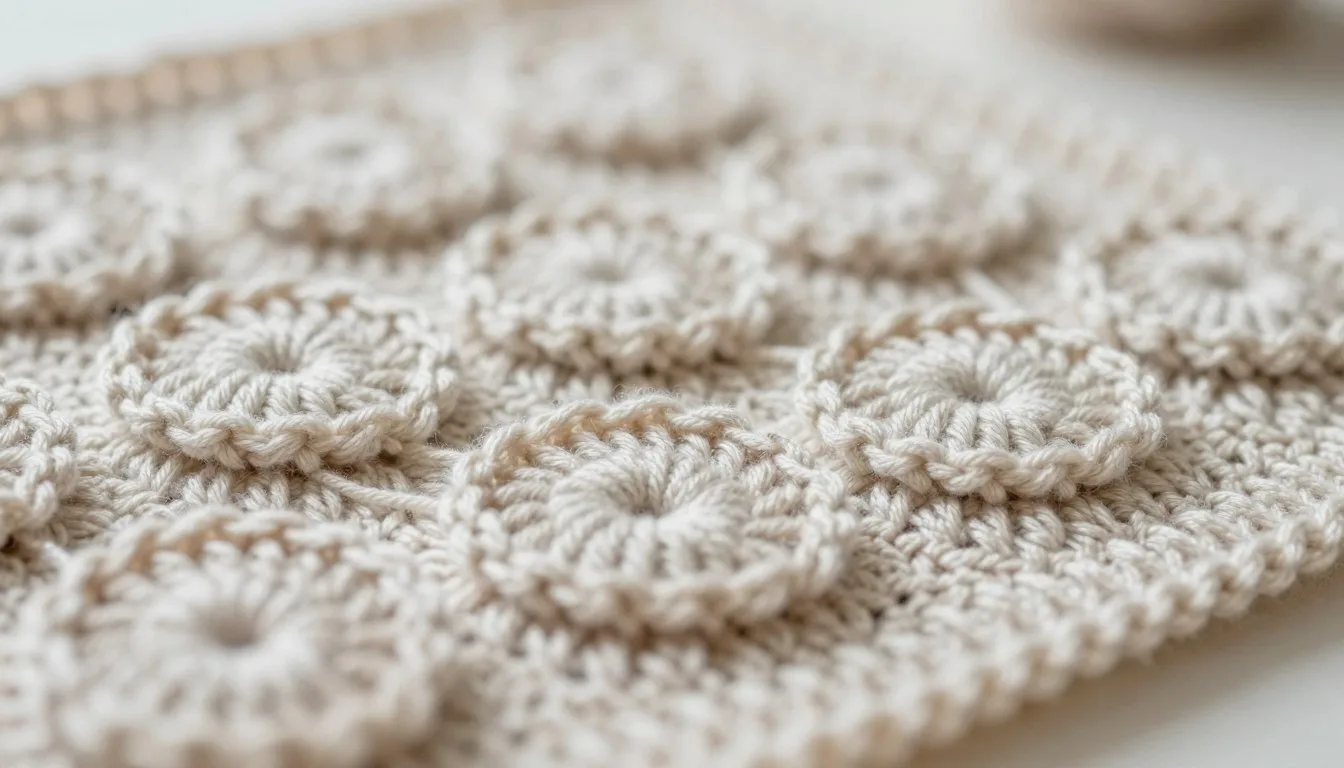
Crochet Shell Stitch: Step by Step Tutorial for Beginners
Table of Contents
The crochet shell stitch groups crochet stitches into fan-shaped shells to create a textured fabric that works well for blankets, scarves, and washcloths. The fans catch the light and give even a small project a clear pattern. If you are learning crochet, a few rows can help you get comfortable with where each stitch goes. This tutorial gives you clear written steps for a practice piece, with a video as another way to see the motions. You can use yarn and a hook you already have, as long as the hook suits the yarn. There is no need to start with a large or costly project. A swatch makes it easier to notice how your stitches look and feel before you choose what to make. A small practice swatch lets you learn the repeat before committing to a larger project.
What Makes a Crochet Shell Stitch?
A shell takes its fan shape because several crochet stitches spread out from one base stitch. A shell is a fan-shaped cluster of crochet stitches worked into one base stitch. The stitches flare outward, then the next anchor single crochet helps set the pattern’s spacing. A common shell stitch pattern uses two rows, with single crochet and double crochet stitches.
The first row forms shells, while the next row places anchors between them. This alternating structure makes a steady fabric without putting a full fan in every stitch. The blanket stitch guide compares shell texture with other simple crochet stitches, including how open the fabric can look.
A common shell pattern uses two rows: one builds the fans, and the other sets anchors for the next row.
Types of crochet shell stitches include compact clusters, open shells, and shells made with stitches of different heights. Patterns can change the number of stitches in each fan, the stitch height, and where the next fan lands. Those choices affect the fabric’s look and spacing, so a crochet shell can feel dense or airy. The anchor single crochet separates the fans and gives the next row a place to build.
Gather Yarn, a Hook, and Basic Tools
You can practice the shell stitch with yarn and a matching hook, plus scissors and a yarn needle for finishing. Choose smooth, light-colored yarn at first, since its stitches are easier to see. Your hook should suit the yarn weight, not just the pattern name.
- Yarn for your practice piece
- A crochet hook suited to the yarn
- Scissors for cutting yarn
- A yarn or tapestry needle for weaving in ends
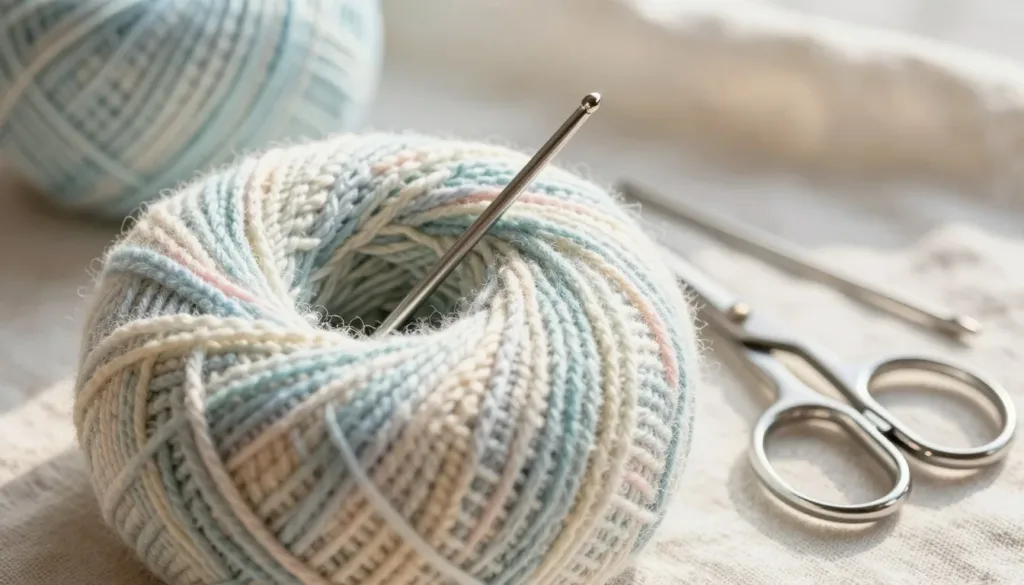
A smooth yarn makes it easier to spot each stitch as you work. Fuzzy or dark yarn can hide the loops, which may make it harder to see where the next stitch belongs. Cotton or acrylic yarn can both work for a swatch, if the yarn label gives a hook size.
One classic shell stitch baby blanket measures 35 x 38 inches and uses a size H-5.00 mm hook with seven balls of Bernat Softee Cotton, a 3-weight yarn. That is a project example, not a supply list for every blanket. Your yarn amount depends on the size and pattern you choose. For hook size comparisons, the Craft Yarn Council’s hook-size guide lists U.S. and metric sizes, with metric sizes offering a reliable way to compare brands. Check the yarn label for its recommended hook size before choosing a hook for your swatch.
Choose the Right Foundation Chain for a Crochet Shell Stitch
First decide whether your shell row will be worked into the chain itself or into a single-crochet base row, because the starting count changes. The first row of your pattern determines which foundation method fits. Use only the formula that matches your setup.
For five-double-crochet shells worked directly into a foundation chain, one method uses a starting chain that is a multiple of six, plus two. A chain-26 practice swatch gives you a small sample of that setup. The added stitches form the edges, so the groups can sit evenly across the row.
A different formula applies when you make a single-crochet base row first: use a multiple of six stitches, plus one. For example, 31 single crochets create space for five shells across. A scarf example uses 19 single crochets for three shells. The single-crochet base row can come from a starting chain, or you can make it with foundation single crochet.
Before you start the shells, check the base-row count against the pattern’s repeat and edge stitches. Each shell group needs enough stitches to fit across without leaving an extra stitch at one side. If the count does not match, check the pattern’s stated edge setup rather than adding stitches at random. Count the base-row stitches before beginning the shell row so you can catch a mismatch early.
Work the Two-Row Shell Stitch Pattern
Once your base row is ready, the shell fabric comes from alternating shell rows with rows of anchor single crochets. This simple crochet shell stitch uses five double crochet stitches for each full shell. Keep the shells and anchor single crochet in the stated sequence.
A simple shell stitch crochet pattern can be followed from a freely available written repeat, without buying a pattern. Crochet shell stitch patterns may change their row edges while keeping the same shell-and-anchor rhythm. In this variation, the chain-1 turning chain does not count as a stitch, while the chain-3 turning chain does count as a double crochet.
- For the first shell row, chain 1 and single crochet in the first stitch. Repeat: skip two stitches, work five double crochets in the next stitch, skip two stitches, then single crochet in the next stitch.
- For the offset row, chain 3, counting it as a double crochet. Work two double crochets in the first single crochet. Single crochet in the center double crochet of the next shell, then work five double crochets in the next single crochet. Keep alternating, and end with three double crochets in the final single crochet.
- Repeat the two alternating rows until the piece reaches your desired length. A half shell uses three double crochet stitches in one stitch when your pattern calls for a smaller edge fan.
The first row creates fans, and the offset row places a new shell in the anchor space. After the first repeat, check that each new shell sits between the shells in the row below.
Fix Uneven Shells and Shape the Edges
If the shell fabric puckers or spreads unevenly, check your spacing and tension before changing the pattern. Uneven shell fabric often points to a skipped stitch or a change in how tightly you crochet. Puckering often means your tension is too tight, while wide gaps can mean too much space separates anchors and clusters.
Look across the row and confirm that each skip-two space is in the right place. Keep your tension steady as you work, since a few tight rows can pull the fabric inward. If the shells still pucker, try a looser hold or one hook size larger. A hook change can alter the fabric size, so check how the new swatch lies.
A shaping row can fill the dips along a blanket’s final edge. Work double crochet in the first stitch, half double crochet in the next two stitches, and single crochet in the next stitch. Then repeat half double crochet in the next two stitches and single crochet across, ending with double crochet in the last stitch.
This sequence softens the peaks and valleys without adding a full shell row. Count each stitch as you work the edge, especially where the stitch height changes. A neat, even edge can also make it easier to add a border. For other beginner-friendly project ideas, you can browse crochet patterns and project categories. Work the shaping row across the full edge before adding a border so the dips have a more even foundation.
Adapt the Stitch for Blankets, Borders, and Variations
A shell stitch blanket can be made wider by adding chain multiples and longer by repeating its rows. More rows add length, while more starting-chain repeats add width. Use the measurements for your chosen pattern, since blanket sizes differ by design.
For example, one shell stitch blanket measures about 30 x 30 inches, while a classic baby blanket pattern measures 35 x 38 inches. In one design, each extra multiple of six in the starting chain adds about 1 3/4 inches of width. A separate 30 x 30-inch example uses a J/10 hook, about 700 yards of worsted-weight main-color yarn, and about 100 yards of border yarn.
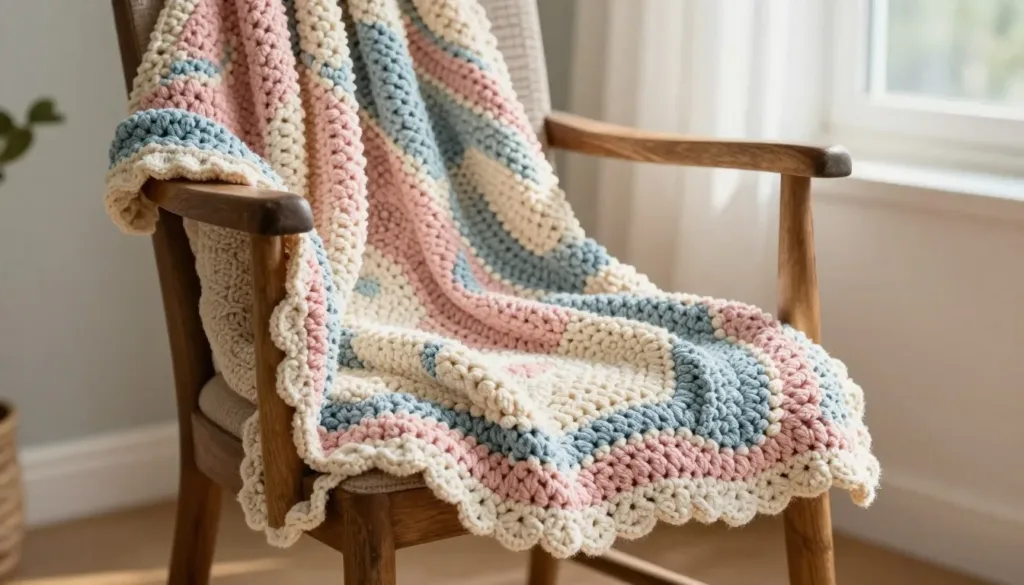
A crochet shell stitch blanket for beginners can use a repeat pattern and grow as you add rows. Before choosing a baby blanket pattern, a swatch can help you judge the texture and open spaces. A printable PDF is available for the classic 35 x 38-inch baby blanket pattern, while an ad-free PDF is available for a 30 x 30-inch shell blanket pattern. A separate newborn blanket pattern shows another beginner project worked in single crochet.
A 30 x 30-inch blanket and a 35 x 38-inch blanket are separate pattern examples, not one standard shell blanket size.
Blanket edges can use different border setups. Treat these as alternatives, not as steps to combine:
- Make a single-crochet round evenly around the blanket, placing three single crochets in each corner space. On the next round, repeat single crochet, skip two stitches, five double crochets in the next stitch, then skip two stitches.
- For a corner-based method, work single crochet, chain 2, single crochet in each corner on the first round. On the next round, repeat that sequence in each chain-2 space.
- For a simple two-round shell border, place three single crochets in each corner space on the first round. On the second round, repeat single crochet, skip one stitch, five double crochets in the next stitch, skip one stitch, then single crochet.
Shell patterns also vary in their stitch count and height. A shell may use four or five double crochets, seven half double crochets, or three treble crochets in one base stitch. A mixed-height cluster can use one single crochet, one half double crochet, one double crochet, one half double crochet, and one single crochet.
Open shells add a chain space at the center: one option uses two double crochets, chain 1, and two double crochets. Another uses chain 3 between the pairs. Shells may stack vertically or stagger into chain spaces or shorter stitches from the previous row. An edging can fan across separate stitches with single crochet, double crochet, treble crochet, double crochet, and single crochet. Choose one border method that matches the edge you have shaped, and keep its corner instructions consistent around the blanket.
Shop Crochet Essentials
Explore useful tools, colorful yarn and books for your next project.
As an Amazon Associate, I earn from qualifying purchases.
Conclusion
Your first shell swatch is a quick way to see how your tension and yarn shape the finished texture. It also shows whether the fans sit evenly and whether you like the fabric’s open spaces. That small test can save time before you commit to a scarf or blanket.
Choose a project size that feels manageable, then use its pattern to set up the foundation. Work a few rows and look at the front and back before deciding whether to continue. If the swatch feels too loose or dense, adjust your yarn or hook for another sample.
Choose your yarn and hook, make a small swatch, and use the result to plan your next crochet project.


