
Stitchin Crochet Patterns for Easy Handmade Projects
Table of Contents
You may have yarn ready for a first handmade project, yet wonder which pattern to try. A clear plan can turn that uncertainty into a few simple steps.
A crochet stitch is a loop or a completed sequence of hook-and-yarn movements that forms a unit in crochet fabric. You can build confidence by practicing a few repeatable steps, even if your first rows look uneven.
With stitchin crochet, you can learn how pattern directions work, practice foundational stitches, and choose a project that fits your time. Beginner-friendly ideas and tutorials at HooksyLane’s About page suit makers starting their first stitches. Understanding the pattern’s instructions is the first practical step.
How Do You Read Stitchin Crochet Patterns?
You read a crochet pattern by matching its abbreviations or symbols to the key, then following each step in order. Check the yarn, hook, starting chain, and row directions before you begin.
Free stitchin crochet patterns and other stitchin crochet patterns may pair symbols with written directions in different ways. Look for both forms before starting, so you know what to follow.

Read stitch abbreviations and symbols
Written patterns use stitch names or abbreviations, while symbol diagrams show where stitches go. Check the pattern’s key, then confirm whether it uses American or British terms.
A missing key can make a familiar mark confusing. Miscounting the starting chain can also shift every later stitch, so count it before working the first row.
HooksyLane also shares beginner-friendly project ideas with clear pattern steps. For a separate place to browse crochet-related downloads, visit the Gumroad crochet page.
Follow a simple center-out star example
StitchinCrochet is a font that displays crochet symbols, not a crochet technique. In an Adobe Illustrator workflow, you type the symbols in that font and turn on View > Show Grid.
One star example starts with center chain stitches joined by a slip stitch. In the next row, work two single crochet stitches into each chain stitch.
The grid helps place the symbols, while the key explains what each one means. Once you can match those marks to their steps, you are ready to learn the stitches they call for.
Which Crochet Stitches Should You Learn First?
After making a starting chain, your next instruction may ask you to work into one of its links. Start with the chain and slip stitch, then add stitches that build height.
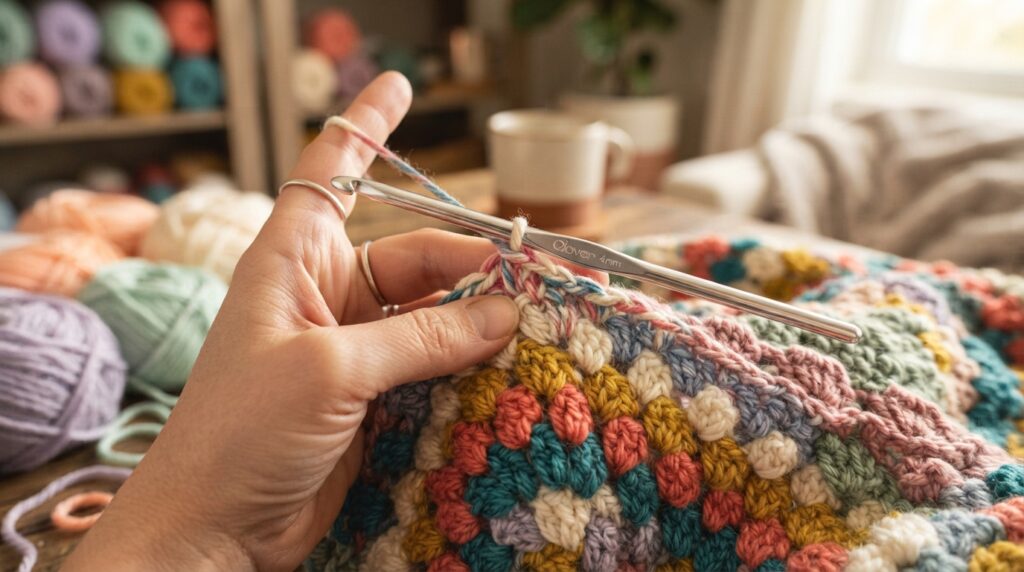
To start a stitch in crochet, insert the hook into the target stitch, yarn over, and pull up a loop. Finish the named stitch as its instructions direct.
Start with the chain and slip stitch
Make a slip knot, place it on the hook, then yarn over and pull through the loop on the hook to form a chain. Repeat for each link.
A slip stitch joins pieces or helps you move across stitches without adding much height. Keep the working yarn loose enough to insert the hook into the next stitch.
Build height with the basic stitches
A completed crochet stitch has a top V, made of front and back loops, and a vertical post beneath it. Charts or pictures can help you compare stitch shapes and height.
Single crochet is the shortest of these basic stitches. Half double crochet, double crochet, and treble crochet build more height in that order.
For a single crochet, insert the hook into a stitch, yarn over, and pull up a loop. You now have two loops on the hook.
Yarn over again and pull through both loops. Do not pull the working yarn so tightly that you cannot insert the hook into the next stitch.
- Chain
- Slip stitch
- Single crochet
- Half double crochet
- Double crochet
Treble crochet is another common height stitch. American and British names differ: American single crochet is British double crochet, half double crochet is half treble, double crochet is treble, treble crochet is double treble, and double treble crochet is triple treble.
These stitches give you a base for small projects. You can find more beginner crochet patterns and project ideas when you are ready to practice them in a simple shape.
What Easy Projects Can You Make With Basic Stitches?
You can choose a small flat project, such as a coaster or dishcloth, or begin a larger blanket. Start with a short repeat that stays the same from row to row.
A simple scarf is another good choice, while a small blanket takes longer to finish. For a stitchin crochet blanket, choose one repeatable stitch and check the pattern’s gauge and finished dimensions.
To crochet a ribbed pattern, work rows in a basic stitch, often through the back loop only. Keep the stitch count steady to form ridges.
Ripple crochet makes repeating peaks and valleys with planned increases and decreases. Count those shaping stitches carefully, or the wave can drift; a ripple is less forgiving than a flat rectangle.
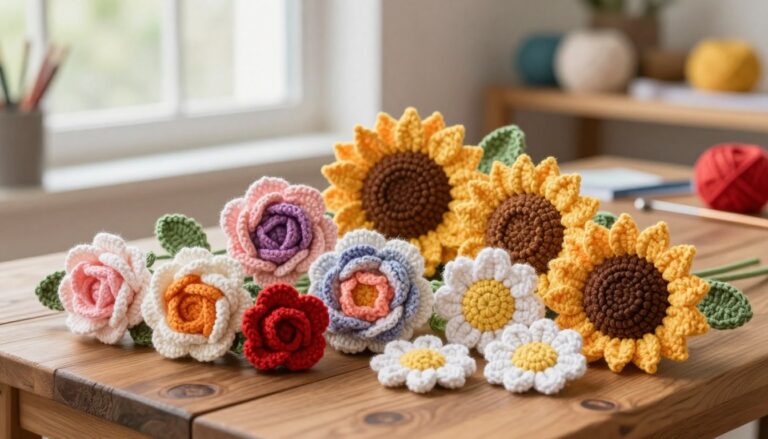
For another small project, try a simple crochet flower. You can also browse Hooksylane on Pinterest for crochet ideas. Pick a project that suits your patience, then set aside one manageable practice session.
Conclusion
A small project with a repeatable pattern is a practical way to begin. Steady tension and accurate stitch counting matter more than speed, especially when you are learning.
Make a small practice swatch first, so you can check your rows before committing to a larger project. If the stitches look uneven, adjust your grip or yarn tension and try another row.
Choose a short pattern, gather yarn and a hook suited to it, and make a starting chain. That first row is your next step toward finishing the project.