Master the Half Double Crochet with Simple Step-by-Step Guide
Do you remember the first time you picked up a yarn hook? That mix of excitement and nerves is familiar to every crafter. If you want to expand your skills, this guide can help.
Our half double crochet tutorial turns those nerves into confidence. With clear guidance, anyone can master this useful stitch. Whether you are new to crochet or refining your technique, this guide helps you create neat, even results.
In this guide, we will help you learn half double crochet from the start. You will gather supplies, build the foundation chain, and work through rows and rounds. Then, you can tackle patterns and begin beginner-friendly projects with ease.
Gather Your Yarn, Hook, and Basic Crochet Supplies
The right tools make learning the half double crochet easier. They give you control and help you form even stitches. Good preparation lets you focus on technique instead of poor materials.
Choose Beginner-Friendly Yarn and the Correct Hook
Choose smooth, light-colored acrylic or wool blends when you are new to crochet. They are easier to see than dark or fuzzy yarns. Medium-weight yarn, labeled as “worsted” or “size 4,” suits half double crochet for beginners because it balances thickness and flexibility.
Match the Yarn Weight to the Recommended Hook Size
Every yarn label lists a recommended hook size and gives you a useful starting point. For worsted yarn, use size H/8 (5.0 mm) or I/9 (5.5 mm). Matching your hook to your yarn keeps stitches easy to work into and firm enough to hold their shape.
Prepare Scissors, a Yarn Needle, and Stitch Markers
A few accessories can make practice easier. Use sharp scissors to trim yarn and a blunt-tipped yarn needle to weave in ends after finishing a project. Stitch markers help you track row ends and avoid accidentally dropping stitches.
Check Your Workspace for Comfortable, Well-Lit Practice
Your workspace can affect your success. Choose a comfortable chair that supports your posture and a bright light, such as a desk lamp. Good lighting is critical when learning the half double crochet because it shows the loops and spaces for your hook.
| Tool | Purpose | Recommendation |
|---|---|---|
| Yarn | Main material | Light-colored worsted weight |
| Crochet Hook | Stitch formation | Size H/8 or I/9 |
| Stitch Markers | Tracking progress | Locking plastic rings |
Understand the Half Double Crochet Stitch Before You Begin
Understanding the mechanics of the half double crochet stitch helps you master your next project. Simple, repeated motions give you control and help create consistent results. This basic skill bridges beginner and advanced crochet techniques.
Recognize the Yarn-Over, Insert, Pull-Through, and Complete Motions
The hdc stitch follows a set sequence that differs from other common stitches. First, wrap the yarn over your hook before inserting it into the fabric. Pull up a loop, then pull through all three loops at once to finish.
To see where the crochet hdc fits, compare it with nearby stitches. Single crochet is shorter and denser, while double crochet is taller and more open. Half double crochet sits between them, balancing texture and drape.
| Stitch Type | Height | Loops on Hook |
|---|---|---|
| Single Crochet | Short | Two |
| Half Double Crochet | Medium | Three |
| Double Crochet | Tall | Two |
Learn How the Hdc Stitch Looks in Finished Fabric
After a few rows, you will see an elegant texture form. The half double crochet stitch makes fabric thicker than single crochet but less airy than double crochet. This makes it ideal for blankets, sweaters, and warm accessories.
Identify the Front Loops, Back Loops, and Top V Shape
At the top of your hdc stitch, you will see a clear V shape made by two yarn strands. These strands form the front and back loops, which anchor your next row. Recognizing them helps keep edges straight and fabric even throughout your crochet hdc project.
Make a Foundation Chain for Your Half Double Crochet Practice
To learn half double crochet, start with a simple, even chain. This foundation supports your whole project, so take time to make it well.
Hold the Hook and Yarn for Better Control
Good hand placement helps you keep steady tension. Hold the hook in your dominant hand, while your other hand guides the yarn.
Keep the Slip Knot Adjustable Without Making It Loose
Make a slip knot and place it on your hook. Ensure the knot is snug but not tight, so it slides easily along the hook shaft without falling off.
Create Even Chain Stitches
Consistency helps skilled crocheters create neat work. Pull each loop through the last one with equal pressure to keep stitches uniform.
Count the Chain Carefully and Account for the Turning Chain
When using half double crochet instructions, count your chains carefully. Add one or two chains at the end as a turning chain to help your work stay straight.
Prepare the Chain for the First Row
When your chain reaches the desired length, begin your first row. Study the chain closely to find each loop.
Insert the Hook into the Correct Chain Loop
For most projects, insert your hook into the second or third chain from the hook. Always check your specific pattern to see exactly where to start and keep your edges clean.
| Stitch Component | Purpose | Best Practice |
|---|---|---|
| Slip Knot | Anchors the yarn | Keep it adjustable |
| Chain Stitch | Forms the base | Maintain even tension |
| Turning Chain | Provides height | Count carefully |
Work the Half Double Crochet Step by Step
The half double crochet uses five simple, repeatable steps. This stitch creates fabric between the height of single and double crochet. This half double crochet tutorial gives you a strong foundation.
Step 1: Yarn Over Before Inserting the Hook
Wrap the Working Yarn from Back to Front
Hold the hook in your dominant hand. Wrap the working yarn over the hook from back to front. This movement helps form the half double crochet stitch correctly.
Step 2: Insert the Hook into the Designated Stitch
Choose the Chain or Stitch Specified by the Pattern
After the yarn over, insert your hook into the next chain or stitch. Work in the space named by your pattern. Consistent placement keeps your work neat.
Step 3: Yarn Over and Pull Up a Loop
Keep Three Loops on the Hook at the Correct Height
Yarn over again, then pull the yarn through the stitch. You should have exactly three loops on your hook. Maintaining even tension helps your stitches look uniform across the row.
Step 4: Yarn Over and Pull Through All Three Loops
Complete the Hdc Stitch Without Tightening the Loops
Yarn over one final time for this stitch. Pull the yarn through all three loops on your hook. These half double crochet instructions prevent tight loops that could make the next row difficult.
Step 5: Repeat the Motion Across the Row
Check That Each Half Double Crochet Has the Same Height
Repeat this process for every stitch across your foundation chain. Check that each half double crochet has the same height. Consistent height creates professional-looking results.
| Step Number | Action Name | Key Focus |
|---|---|---|
| 1 | Yarn Over | Back to front motion |
| 2 | Insert Hook | Correct stitch placement |
| 3 | Pull Up Loop | Three loops on hook |
| 4 | Final Pull-Through | Pull through all three |
| 5 | Repeat | Maintain even height |
Work Half Double Crochet Rows with Clean Edges
Keeping your sides even gives your project a polished look. Once you master the hdc stitch, you will see how edges shape your fabric. Use a steady turning method to keep each row uniform from start to finish.
Turn Your Work Without Losing the First Stitch
Turn your work carefully to avoid skipping the first stitch of a new row. This habit keeps your stitch count correct and your edges straight.
Decide Whether the Turning Chain Counts as a Stitch
First, decide whether your turning chain counts as the row’s first stitch. Many patterns explain this choice because it changes where you place your first crochet hdc. If it counts, skip the first base stitch to prevent extra fabric width.
Insert the Hook Under Both Loops of Each Stitch
For sturdy fabric, insert your hook under both loops of the stitch below. This method adds stability and prevents holes caused by using one loop. It is a key skill for any hdc stitch project.
Locate the First and Last Stitch on Every Row
The last stitch can look tighter than the others, making it hard to find. Find the turning chain’s top two loops from the previous row. This step helps keep your edges straight and your shape professional.
Build Straight Sides Across Multiple Rows
Straight sides take patience and steady hands as you work across rows. If edges curve or widen, check your tension and make sure you have not added or dropped stitches.
Use a Stitch Marker to Protect Difficult Edge Stitches
If the last stitch is hard to see, use a stitch marker before turning. Place it in the top loop of the last crochet hdc you made. This guide shows where to insert your hook when you return to the edge.
Use Half Double Crochet in Rounds and Circular Projects
Moving from flat rows to circles gives your crochet projects new creative options. You can adapt the half double crochet stitch for hats, baskets, and circular motifs. This method creates seamless items with the same texture throughout.
Join the Foundation Chain Without Twisting It
Keep your foundation chain perfectly straight when starting a circular project. A twisted chain can make the whole project spiral incorrectly and prove hard to fix. Lay the chain flat on a table before joining its ends.
Place the Hook in the Correct Chain to Form a Ring
Insert your hook into the first chain stitch you made. Keep the chain facing upward so the bottom loops line up. Pull the yarn through both the loop on your hook and the first chain to make a secure ring.
Work Even Hdc Rounds Around the Center
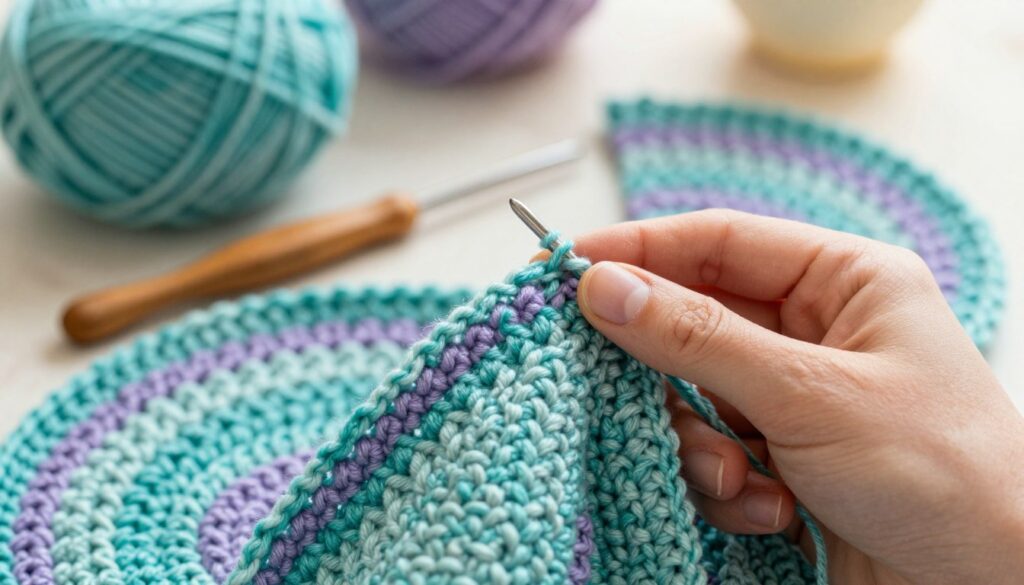
After forming the ring, begin working your half double crochet stitch in rounds. Yarn over, insert your hook into the next stitch, and finish as you would in a flat row. Round work creates a continuous spiral, so you do not turn at each round’s end.
Position Stitch Markers at the Beginning of Each Round
Continuous circular work can make the round’s starting point hard to track. You should place a stitch marker in the first stitch of every round to keep count. This habit keeps your half double crochet pattern accurate as your project grows.
Increase Stitches to Keep Flat Circular Shapes
Add extra stitches at regular intervals to keep circular fabric flat. Without increases, the work pulls inward and forms a bowl. Adding stitches lets the fabric expand while keeping a smooth, level surface.
Recognize Curling, Ruffling, and Uneven Expansion
Your fabric shows whether your increase rate is correct. If edges curl upward, add more increases so the fabric can lie flat. If the fabric ruffles or waves, you added too many stitches, so reduce how often you increase.
| Issue | Cause | Solution |
|---|---|---|
| Curling | Too few increases | Add more stitches per round |
| Ruffling | Too many increases | Reduce the number of increases |
| Uneven Shape | Inconsistent tension | Check your stitch count regularly |
Count Stitches and Read the Shape of Your Fabric
Learning to read stitch patterns can save time and reduce frustration as your skills grow. Reading your fabric’s structure helps you find errors early and keep your project on track.
Count Completed Half Double Crochet Stitches
Accurate counting supports every successful project. The texture can make a half double crochet stitch hard to count.
Use the Top V Shapes Instead of Counting Vertical Posts
Many beginners count vertical posts and get incorrect totals. Instead, study the top of your work for clear V-shaped loops. Each V shows one completed stitch and helps you track progress.
Check Row Height and Overall Width
Do more than count stitches; check your fabric’s size, too. Steady height and width help create a professional finish.
Measure Your Swatch Against the Intended Half Double Crochet Pattern
Compare your practice swatch with the measurements in your half double crochet pattern. If it differs greatly, adjust your tension or hook size to match the designer’s gauge.
| Measurement Type | What to Check | Why It Matters |
|---|---|---|
| Stitch Count | Top V-shapes | Ensures correct width |
| Row Height | Vertical distance | Maintains project length |
| Gauge Swatch | Pattern requirements | Matches final dimensions |
Maintain Consistent Stitch Counts from Row to Row
Use the same stitch count in each row to prevent accidental widening or narrowing. Consistent counts create clean, straight edges.
Record Increases, Decreases, and Turning Chains
If your project needs shaping, use a simple notebook to track progress. Always note your turning chains, because patterns often count them as stitches. Record every increase and decrease to avoid losing or gaining stitches.
Control Tension for Neat, Even Crochet Hdc Fabric
Steady yarn flow helps you make neat, even stitches every time. With steady tension, your half double crochet fabric drapes well and feels comfortable.
Keep the Working Yarn Moving Smoothly
Relax Your Hands and Avoid Pulling Each Loop Too Tight
Beginners often pull yarn too tightly, making stiff fabric. Keep your hands relaxed and let yarn glide through your fingers. When learning, Consistent pressure matters more than speed.
Adjust Loop Height for Consistent Stitches
Raise the Loop to Match the Height of the Hook Shaft
For uniform crochet hdc stitches, watch each loop’s height. After pulling up a loop, raise it slightly against the widest part of your hook shaft. This habit keeps rows even and prevents distorted stitches.
Use a Practice Swatch to Improve Muscle Memory
Change Hook Size When the Fabric Is Too Tight or Loose
If your swatch feels dense or shows gaps, check your hook size. A half double crochet project needs a good match between yarn weight and hook size. If your work stays tight, move up one hook size for flexible fabric.
| Issue | Potential Cause | Recommended Fix |
|---|---|---|
| Fabric is too stiff | Tight tension | Relax hands or increase hook size |
| Fabric has large gaps | Loose tension | Tighten grip or decrease hook size |
| Uneven edges | Inconsistent loop height | Match loops to hook shaft |
A small swatch lets you test changes without pressure from a large project. With time, your hands develop the muscle memory needed to keep perfect tension automatically. This consistency marks skilled work with crochet hdc patterns.
Fix Common Half Double Crochet Mistakes
Even skilled crafters face problems when working with yarn. Learning to fix errors protects the quality of your hdc stitch projects.
Correct Missed Stitches and Extra Stitches
Trace the Top Edge to Find Where the Count Changed
If your fabric grows or shrinks, your stitch count may be uneven. Trace the top edge carefully to find the problem.
Look for the “V” shapes made by each stitch’s top loops. Add or remove a stitch where the count changed.
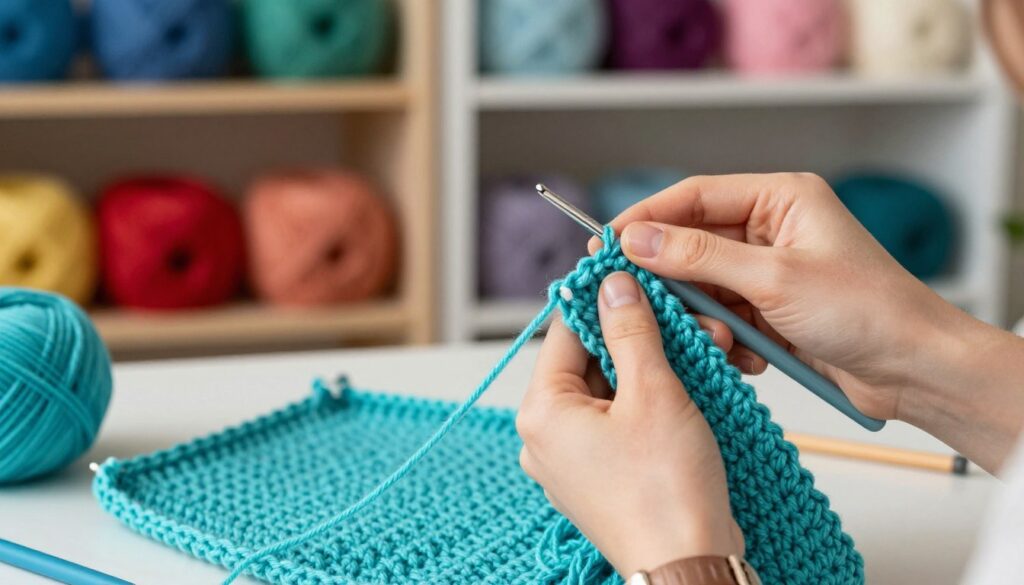
Repair Loose, Tight, or Uneven Loops
Unravel Back to the Mistake and Rework the Stitch
Tension problems can make loops too loose or tight. Gently remove your hook, then unravel the yarn back to the mistake.
After reaching the problem, rework the hdc stitch with a steady yarn pull. This extra time creates professional, even fabric.
Prevent Gaps at the Row Ends
Work Into the Final Stitch Before Making the Turning Chain
Gaps can form when you skip the last stitch. Count your stitches before turning the fabric.
Insert your hook into the final stitch before making the turning chain. This habit keeps edges straight and prevents holes.
Handle Split Yarn and Stuck Hooks
Slow Down and Replace Damaged Yarn When Necessary
Your hook may catch a yarn strand and split or fray it. Stop at once if the hook will not pull through.
Slow down and catch the whole strand with your hook. If the yarn is badly damaged, cut it and restart with fresh yarn.
Protect Your Hands During Extended Practice
Take Breaks and Adjust Your Grip if Your Fingers or Wrists Hurt
Long crochet sessions can tire your hands or wrists. Stop if you feel discomfort, and stretch your fingers.
Adjust your hook grip until it feels more comfortable. Taking frequent breaks helps you enjoy crocheting without pain.
| Common Issue | Primary Cause | Quick Fix |
|---|---|---|
| Uneven Edges | Skipping end stitches | Count every row |
| Tight Fabric | Pulling yarn too hard | Relax your grip |
| Split Yarn | Hook catching fibers | Slow down pace |
Read Half Double Crochet Patterns and Abbreviations
Pattern shorthand opens creative possibilities. Learning to decode these symbols lets you follow any half double crochet instructions found in books or online.
Recognize Common Written Instructions for Hdc
Interpret “Half Double Crochet,” “Hdc,” and “Crochet Hdc”
Designers use different terms for the same stitch. Whether you see the full name or crochet hdc, the technique stays the same. Knowing these variations helps you start new projects with confidence.
| Term Used | Meaning | Common Usage |
|---|---|---|
| Hdc | Standard Abbreviation | Most patterns |
| Half Double | Full Name | Beginner guides |
| Hdc st | Stitch count | Row instructions |
Follow Stitch Counts, Repeats, and Parentheses
Separate Individual Instructions from Repeated Pattern Sections
Patterns often use parentheses to group stitches for repeating. Look for the multiplication symbol or the word “repeat” to learn how often to work the sequence. This logic helps you keep an accurate half double crochet pattern.
Understand Variations in Turning-Chain Instructions
Check Whether the Pattern Treats the Chain Two as a Stitch
Check how the designer handles the turning chain. Some patterns count chain two as the row’s first stitch, but others do not. At your project’s start, Always check the notes for chain counts; this prevents mismatched stitch counts and uneven edges.
Build Confidence with Simple Half Double Crochet Projects
Simple, rewarding projects build confidence while highlighting your new skills. Working on real items helps you learn half double crochet better than practicing on a plain swatch alone. Watch your progress grow row by row.
Practice with a Small Rectangular Swatch
Use the Swatch to Test Tension and Edge Consistency
Before a large item, make a small rectangle to check your work. This step helps half double crochet for beginners check whether stitches look even. Check the edges for added or dropped stitches when turning.
Make a Beginner-Friendly Dishcloth or Washcloth
Practice Straight Rows, Border Placement, and Finishing
A dishcloth is an ideal project for practicing straight rows. You can add a simple single crochet border for a polished finish. This project teaches corner control and helps you keep a consistent shape.
Create a Simple Scarf with Repeated Hdc Rows
Maintain the Same Stitch Count Across the Project
A scarf helps you master a half double crochet pattern through repetition. Since its width stays constant, you can build muscle memory for even tension. Consistency is the key to a professional-looking accessory you can wear with pride.
Try a Basic Half Double Crochet Pattern in Rounds
Apply Increases and Stitch Markers to a Small Basket or Hat
Working in rounds teaches you to increase and keep fabric flat. Stitch markers show where each round begins and ends, which helps prevent errors. This technique helps you make structured items, such as small storage baskets or cozy hats.
| Project Type | Primary Skill | Difficulty Level |
|---|---|---|
| Rectangular Swatch | Tension Control | Beginner |
| Dishcloth | Edge Consistency | Beginner |
| Simple Scarf | Stitch Repetition | Easy |
| Small Basket | Working in Rounds | Intermediate |
Weave in Ends and Block the Finished Fabric
Use Gentle Blocking to Improve Shape and Stitch Definition
Proper finishing matters as much as the stitching. Always weave yarn tails securely with a tapestry needle so your work does not unravel. Finally, gentle blocking relaxes fibers and greatly improves the overall shape and stitch definition of your handmade creation.
Conclusion
You now have the core skills to create beautiful fabric with the half double crochet stitch. From gathering basic supplies, such as Lion Brand yarn, to making your first foundation chain, you reached an important milestone.
Regular practice helps improve your tension and stitch consistency. Each swatch builds muscle memory, helping you try any half double crochet pattern with confidence. Watch your stitch counts and row edges so your projects look polished.
Try different hook sizes and yarn weights to explore changes in your fabric’s texture. A new half double crochet pattern feels easier when you know the yarn-over and pull-through rhythm. As you practice with your hook, you will improve at fixing common mistakes.
Share your finished creations with the crafting community and inspire others. Keep your needles and hooks ready for your next creative project. Learning this versatile stitch can lead to endless possibilities in handmade textiles.