
Crochet Patterns for Beginners: Easy Projects to Try
Table of Contents
Seeing dozens of crochet patterns before you know their skills can make choosing your first project feel hard. A lovely design may hide steps you have never tried.
You do not need to master every technique before making something useful. A first project can teach a few skills while giving you an item you can use.
A simple shape is a good sign. So are repeating stitches, which let you practice the same move across several rows.
That steady practice helps you learn without managing many new steps at once. Your first piece can be small and still feel like a real accomplishment.
The right pattern should fit your current skills, not someone else’s pace. A quick check of its instructions and materials can help you choose with confidence.
Start by checking whether the pattern and its materials suit your experience. A few clear clues can make that choice much easier.
What Should You Look for in a First Crochet Pattern?
Choose a pattern with one or two familiar stitches and a shape you can recognize. A rectangle or square is easier to follow than a design with many parts.
Gauge is the number of stitches and rows in a measured area of crochet, used to check whether your work matches a pattern’s intended size. A swatch is a small test piece that helps you check gauge before starting.
Choose yarn and a hook that are easy to handle
Medium-weight yarn is a common starting choice, but follow the yarn weight category and hook size listed in your pattern. Smooth, light-colored yarn makes individual stitches easier to see and count.
Dark or fuzzy yarn can hide the loops you need to spot. A short materials list also helps you avoid buying tools for techniques the project does not use.
Check the pattern’s skill notes and instructions
Look for repeated rows, clear photos or a video, and stitch abbreviations explained in the pattern. These details make beginner crochet easier to follow when you pause and resume.
A crochet patterns for beginners book can give you several projects and one steady reference. Check that it uses US crochet terminology if that is what you are learning.
Read the skill notes before you begin, then scan the whole pattern for steps you do not know. A step-by-step guide to reading crochet patterns can help you make sense of common abbreviations and pattern formats.
Once you have picked a pattern, its stitch instructions are the next thing to understand. A few basic stitches and abbreviations appear in many easy projects.
Which Basic Crochet Stitches Should You Learn First?
Most first projects use a chain and one or two basic crochet stitches. You can make many flat pieces by repeating those steps across rows.
A written pattern gives stitch names and counts, while a photo or video can show where each loop sits. Check the pattern’s terminology before you start.
How to Crochet for Beginners Step by Step With Pictures
A chain stitch often forms the foundation row, which gives you loops to work into. A turning chain brings the yarn up to the height needed for your next row.
Close-up pictures can help you find the loop where your hook enters. A video tutorial can show the hand movement, then let you pause and compare your work.
What single, half double, and double crochet each do
Single crochet makes a short, firm stitch. Half double crochet adds one yarn-over before you pull through, creating a taller stitch.
Double crochet adds another yarn-over and makes a taller, looser fabric. Patterns may use one stitch throughout or combine several for a different texture.
US and UK crochet patterns use some different stitch names and abbreviations. In US terms, single crochet is called double crochet in UK terms, so check the pattern label.
Knowing how to read a stitch sequence makes it easier to practice without guessing. Small, flat projects give you room to repeat these stitches at a comfortable pace.
Crochet Patterns for Beginners: Dishcloths, Coasters, and Mug Rugs
A dishcloth can become a useful kitchen item while you practice rows. Its flat shape lets you focus on the stitch sequence instead of complicated construction.
Dishcloths and mug rugs make good easy crochet projects because they do not take long to build up. Try one of these simple crochet patterns for beginners:
- The Nantucket Easy Double Crochet Dishcloth uses double crochet and single crochet.
- The Lemon Peel Stitch Dishcloth alternates single crochet and double crochet for texture.
- The Easy Crochet Mug Rug uses the linen stitch.
- A plain single-crochet washcloth gives you repeated rows of one stitch.
The Lemon Peel pattern combines two familiar stitches in a regular sequence. That texture gives you practice switching stitches while keeping the pattern easy to track.
Coasters offer a smaller version of the same practice, with fewer rows to count. A crochet dishcloth can also show you whether your rows stay close to the same width.
A common mistake is choosing a textured pattern before you can identify its stitch repeat. Check one repeat first, so you know what to work across each row.
For more easy crochet patterns and project ideas, browse Hooksylane on Pinterest. After a small flat project, you can use similar repeated rows to make something wearable.
What Wearable Projects Can You Make With Basic Stitches?
A familiar rectangle can become a wearable accessory with only a little finishing. Scarves, headbands, and some hats let you use basic stitches without shaping a full garment.
Scarves offer repeated rows without garment shaping, so you can focus on steady stitches. A rectangle-and-seam hat keeps construction simple, too.
- The Beginner Half Double Crochet Hat starts as a flat rectangle that you sew together.
- The Easy Super Scarf uses super bulky yarn, a large hook, and double crochet stitches.
- The Twist Headband uses single crochet and half double crochet with bulky yarn.
- A straightforward double-crochet scarf repeats the same stitch across each row.
The Beginner Half Double Crochet Hat shows that a hat does not need to start in the round. Its rectangle is joined at the end to form the wearable shape.
Chunky yarn can make a project grow faster, but its thick strands may make individual stitches harder to see. Count rows as you go, especially if the pattern calls for a set length.
A scarf can be a useful place to practice double crochet stitches over a wider piece of fabric. You can stop when it reaches the length you want, as long as the pattern allows that change.
When you want to work over a wider area, a blanket offers plenty of repeated stitches. Its size and construction help determine how manageable the project feels.
Which Blankets Are Manageable for a Beginner?
A beginner can make a blanket if its stitch pattern and construction stay simple. A small baby or lap blanket can be easier to manage than a large throw.

Choose between one continuous piece and separate squares. A single piece means longer rows, while squares let you work in shorter sessions and join the pieces later.
- The Harvest Throw uses single crochet and chain stitches.
- The Mulberry Twist Throw uses wide half double crochet and wide double crochet.
- The Block Blanket uses separate squares with alternating single- and double-crochet rows, then sews them together.
- A small baby or lap blanket gives you a more compact size to work on.
Each construction has a different rhythm. A continuous crochet blanket keeps you on the same piece, while separate blocks let you finish one square at a time.
Repeating stitches across a blanket helps you practice tension, turning, and keeping rows even. A simple blanket pattern can still take sustained time because the piece covers a large area.
Keep your progress steady by working on a few rows when you have time. You do not need to finish a full blanket in one stretch to learn from the pattern.
A small throw can be a useful next step if you enjoy repeated rows. If you want a different shape, bags and pouches add simple folding or seaming.
What Bags and Pouches Work Well as First Projects?
One long crochet rectangle can become a bag when you fold and seam it. A simple shape can turn into a useful carry item without much shaping.
These crochet projects offer a few ways to try construction:
- The Beginner Double Crochet Origami Bag is made from one long rectangle.
- The Easy Crochet Market Bag is worked in the round from the bottom up using basic stitches.
- The Magnificent Mini Pouch uses single crochet.
- A simple rectangular pouch can be folded and seamed at its sides.
The Origami Bag uses folding to create its shape, while a pouch can be joined along two edges. These easy crochet patterns keep the main fabric simple.
The Market Bag introduces working in the round, which means you continue around the piece rather than turning after every row. Follow the pattern’s instructions for joining or continuing each round.
Straps and seams need to hold when a bag carries weight. Choose a crochet pattern with clear finishing steps, and follow its directions for attaching the strap and securing the seams.
A small pouch can also help you practice finishing without committing to a large piece. Small household projects offer another useful choice when you want to use less yarn.
Which Useful Small Projects Use Little Yarn?
Leftover yarn can become a small, useful item instead of sitting in your basket. A modest amount may be enough for a cozy or glasses case.
These small crochet projects suit a quick make or a bit of leftover yarn:
- The Magic Square Crochet Potholder uses single crochet.
- The Freeze Pop Cozy is worked in continuous rounds of single crochet.
- A cup cozy is a small cover that fits around a cup.
- A glasses case makes a compact project with a practical use.
Small cozies can use limited yarn, and cotton is a common choice for cozies. Check the pattern’s materials and size before you start, since different yarns make different fabrics.
The Freeze Pop Cozy grows in continuous rounds, while the potholder is worked flat. Those forms give you two different ways to practice without making a large piece.
Do not assume a small crochet item can protect you from hot cookware. A potholder pattern should name materials and construction suited for heat, and you should follow those instructions.
A cup cozy or glasses case can offer a quicker finish than a larger project. If you want to make a small toy, amigurumi adds practice with rounds and shaping.
Can Beginners Make Amigurumi?
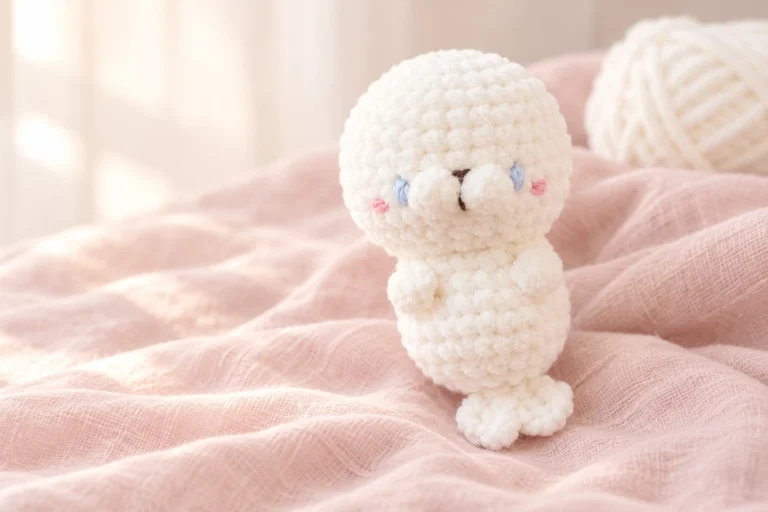
Yes, beginners can make amigurumi, but a small, simply shaped toy is easier to start with than a detailed character. Choose a design with few parts and clear steps.

Possible starter shapes include:
- A small bear with a simple body and face.
- An octopus with a rounded head and short legs.
- A simple snake made as one long shape.
- Other basic rounded forms with few separate pieces.
Amigurumi is commonly worked in single crochet. Many beginner patterns also use increases and decreases to shape the toy, so you need to count stitches more often than with a flat dishcloth.
A video walkthrough can show how the piece changes as you work around it. The Bear Amigurumi Pattern includes a video tutorial, which can help you compare each step with your work.
An intricate face or many separate parts can make a first toy harder than its stitch choice suggests. A basic shape gives you room to learn the pattern’s counting and shaping steps.
You can browse beginner-friendly crochet patterns and project ideas for ideas such as frogs, octopuses, and mini amigurumi. Next, check how a pattern’s steps match the skills you have practiced.
How Do You Choose a Pattern That Fits Your Skill Level?
A polished pattern can still suit a beginner if it repeats a few clearly explained stitches. Judge the techniques, not just how complex the finished project looks.
Check the skill label, stitch count, shaping, and materials before you begin. Then look at whether the instructions include written steps, pictures, or a video.
Where to find free crochet patterns for beginners
Free crochet patterns for beginners are available in many formats. For free crochet patterns for beginners step by step, check that the full instructions are available, not only a preview.
Read the full pattern before starting and note any techniques you have not tried. A skill label can help, but the steps themselves show how much counting or shaping you will need.
Look for modern patterns with step-by-step support
Modern crochet patterns for beginners step-by-step can use basic stitches, even when the finished style looks current. Focus on the techniques and the help provided for each step.
A book offers a collected set of patterns, while an individual pattern may be easier to keep beside your work. Choose the format you can follow comfortably.
For another place to browse, see Hooksylane’s Gumroad page. Once a pattern fits your skills, check your stitch count and measurements as you work.
How Can You Finish Your First Project Neatly?
A slightly uneven first piece can still be finished and used. Small changes in tension are normal while you learn how to keep your stitches steady.
Use this checklist as you work through the last rows and finishing steps:
- Count the stitches at the end of each row.
- Identify the first and last stitch before turning.
- Compare your work with the pattern’s measurements.
- Weave in the yarn ends securely when the piece is complete.
Counting helps you catch a missed or added stitch before it changes the next row. A ruler or tape measure can show whether your work matches the pattern’s size.
A video tutorial can help you compare your hand movement with the written instruction. Use it to check one step at a time, rather than guessing at a loop or turn.
A common mistake is undoing an entire row before checking the stitch count or turning chain. Look for the cause first, then decide whether you need to pull out the work.
When the piece is done, weave the ends through several stitches so they stay in place. Choose one appropriately simple project, then begin with its first chain or foundation row.
Conclusion
The best first project is one you feel ready to finish, not the most ambitious one you can find. Repeating stitches in a small piece gives you a clear place to practice.
As your confidence grows, you can move on to wearables, blankets, bags, or toys. You do not need to learn every technique before trying a new shape.
Choose a dishcloth or a similarly small project, gather the yarn and hook listed in its pattern, and make a short practice swatch. Then select the pattern and make its first few stitches.