
Crochet Kits for Beginners: Easy Projects to Start
Table of Contents
A first crochet project is easier to start when the pattern, materials, and amount of practice feel manageable. A well-matched kit can help you learn basic stitches while making something useful or a gift. A stitch marker is a small clip that marks a stitch or round so you can keep your place while crocheting.
You may come across yarn made from different materials, such as cotton. The best choice depends on the project and the pattern, not on one material being right for everyone. Project size, clear instructions, and the time you have matter as much as the listed skill level. A small item may fit a few free evenings, while a larger project could take weeks of steady work.
Your first project should give you room to learn without making the work feel like a chore. Choose something that interests you, whether you want to keep it or give it as a handmade gift. You will find practical ways to choose a project and check a kit, starting with the features that make its instructions easier to follow.
What Makes a Crochet Kit Beginner-Friendly?
A beginner-friendly kit gives you a clear next step whenever you finish a stitch or row. Look for a pattern that explains its stitches and shows how to assemble and finish the project. The word “beginner” on a label is not a universal promise: sellers may use skill levels in different ways.
Some patterns explain each step in writing, while others add diagrams or video lessons. Beginner-friendly crochet patterns and tutorials can also help you practice when you want more guidance than a kit provides.
Clear instructions you can follow
Instructions should name the stitches you need and explain any short forms. They should also tell you when to join pieces, weave in loose ends, or shape the finished item. A simple design can still be frustrating if the pattern skips how to join or finish its parts.
Before you choose a kit, check whether you can find answers to these questions:
- Does the pattern explain its stitch names?
- Are the instructions easy to follow in order?
- Can you see a picture of the finished project?
- Does the listed skill level fit your experience?
- Can you get help from diagrams or a video?
A project that teaches manageable skills
A good first pattern lets you practice a few techniques without asking you to learn everything at once. A project may still suit you if one new stitch appears, as long as the instructions teach it clearly. Check the pattern itself, not only its level label, when deciding if the challenge feels right.
Once you know what makes the learning experience clear, consider the size and shape of the item you want to make.
What Should You Crochet First?
If you want a quick first finish, choose a small accessory rather than committing to a large blanket. A smaller project lets you practice without spending weeks on one piece. A beret, for example, takes less listed time than a vest or blanket, though your pace may differ.
Project hours offer a rough comparison, not a promise. The estimates below do not set a consistent project size or a universal crocheter’s pace. Your actual time can change with your speed, the item’s size, and how much you pause to learn.
| Project type | Example | Estimated time |
|---|---|---|
| Small accessory | Beret | 5-8 hours |
| Wearable | Vest | 15-25 hours |
| Blanket | Blanket | 30-60 hours |
Small accessories for a quick finish
A small accessory can give you a clear goal and a chance to repeat basic stitches. You may be able to finish it before you lose interest or forget what you practiced. A beginner beret is estimated at 5-8 hours, but that is only a guide.
Small does not always mean simple. Look at the pattern for shaping steps, changes in stitch count, or other techniques that may be new to you.
Wearables and blankets for longer practice
A vest adds garment shaping and fit questions, so it can call for more care than an accessory. A vest estimate runs 15-25 hours. A blanket can offer repeating stitch practice, but its 30-60 hour estimate signals a longer commitment.
Once you have a project type in mind, use the following selection criteria to compare beginner kits.
How to Choose Crochet Kits for Beginners
Start with the item you actually want to use or give, then check whether the pattern’s demands suit you. The best crochet kits for beginners are a matter of project fit and instruction quality, not an unsupported ranking. A kit with many accessories is not automatically easier if its pattern or teaching materials are hard to follow.
A product page may show the listed skill level and estimated project hours. These details help you compare options, but they cannot guarantee how quickly you will finish. Your practice time and comfort with the pattern affect that.

Use these four steps to narrow your choices:
- Choose the finished item you want to make.
- Check its listed skill level and the techniques in its pattern.
- Decide whether the estimated project time fits your schedule.
- Make sure the instructions and help suit how you learn.
Match the project to your available time
Think about how often you can sit down to crochet, not only how many hours the listing gives. A long project may work if you enjoy returning to it in short sessions. A small accessory can suit you better when you want to see a result sooner.
Check what teaching support comes with it
Written steps may be enough for you, or you may learn more easily from a diagram or video. Check whether the kit explains unfamiliar stitches and offers help for tricky parts. You can also look for a separate beginner crochet tutorial collection if you want extra practice beyond the kit’s own instructions.
After deciding how to choose, check that the box contains the tools and materials needed to begin.
What Supplies Should a Beginner Crochet Kit Include?
Before checkout, check whether the kit supplies the materials for one named project or only a collection of tools. A project kit should identify the yarn and crochet hook needed for its pattern. A general tool bundle may include a range of tools or yarns that you must match to a project yourself.
For one project, check that the listing names the yarn, the correct-size crochet hook, and a written pattern. A tapestry or darning needle helps you weave in loose ends. Some projects also need extras, such as stuffing for a soft toy.
A stitch marker and scissors can make your work easier, but not every kit includes them. Check the actual listing instead of assuming each useful tool comes in the box. A full kit may also offer a project-specific video tutorial or a woven label, but neither is standard across all kits.
A kit’s name alone may not tell you which supplies it includes. Read the contents and note anything the seller says you need to provide yourself.
With the contents understood, compare actual project kits by skill level, time, and price.
Which Beginner Crochet Projects Can You Shop For?
A short snood and a blanket ask for very different amounts of time, even when both carry a beginner label. Compare a kit’s listed skill level, project time, and price rather than treating one option as right for everyone. These examples show how much those details can vary.
The figures below are listed examples, not endorsements. Displayed prices and project estimates can change, and the items may not have comparable sizes or contents. The category also includes intermediate garments and add-on kits, so check the level and whether each item is a complete project kit.
| Kit | Listed skill level | Listed project time | Listed price |
|---|---|---|---|
| Yagasuri Snood Kit | Beginner | 4 hours | $59.99 |
| Thasos Beginner Placemat and Coaster Set Kit | Easy | 7 hours | $69.99 |
| Botos Tee Kit | Beginner | 32 hours | $94.99 |
| Matcha Blanket Kit | Beginner | 40 hours | $184.99 |
| Rhodes Blanket Kit | Beginner | 64 hours | $99.99 |
The Yagasuri Snood Kit lists four hours, while the Rhodes Blanket Kit lists 64. A short listed time may suit someone hoping for a quicker finish, while a garment or blanket may appeal to someone who wants a longer project.
Listed skill labels are not a shared standard. “Easy” and “beginner” can signal different things from one listing to another, so read the pattern details before you decide.
Use the blanket examples as a reason to weigh the appeal of a large project against the longer commitment.
Are Blanket Crochet Kits a Good First Project?
A blanket can be a first project if you want steady practice more than a quick finish. Repeating stitches can help you practice, but a large piece asks for more yarn, attention, and space. Keep the work organized so it does not get in your way between sessions.
For crochet kits for beginners making a blanket, compare the listed time with the commitment you want. The Matcha Blanket Kit lists 40 hours, while the Rhodes Blanket Kit lists 64 hours. Neither figure guarantees how long you will take, and neither kit is automatically the best starting choice.
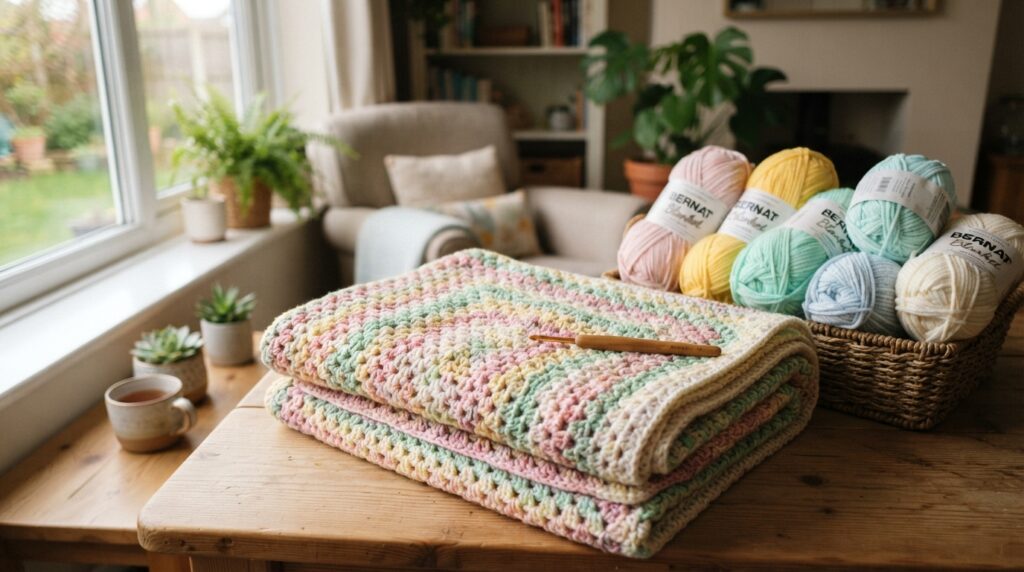
A blanket may suit you if you enjoy repeating a stitch and can keep working on one project over time. A smaller project may feel more rewarding if you want to see the whole result sooner. Your available room also matters, since a growing piece needs a place to rest between sessions.
No typical finished blanket size or guaranteed finish time is established by these listings. Size, your pace, and learning as you go can all affect the work. Read the pattern details for the specific blanket before you commit.
If you are choosing for someone else, age and the kind of instruction they need may matter more than project size alone.
What Should Adults and Kids Look for in a Beginner Kit?
Choose for the learner’s patience, reading comfort, and interest, not just the package’s appearance. A kit should suit the person who will use it, and its age guidance should come from the seller. An adult learning from scratch may want clear steps, video help, and a project they truly want to finish.
A beginner crochet kit for adults may work well when its instructions show each step in order. For a child, check the stated age range and whether an adult should help with small tools or hard steps. Crochet kits for kids who are beginners do not all suit the same age or reading level.
Before choosing, check these four points:
- The age range stated by the seller.
- Whether a supervising adult is needed.
- Whether the learner can read the instructions.
- Whether the project lets them practice its skills.
Kits for adults learning from scratch
Clear written steps can help you work at your own pace. A video may be useful if you want to see how a stitch moves before trying it. Pick a project that holds your interest, since that can make it easier to return to the work.
Kits for kids who are ready to practice
A child may need simpler directions and an adult nearby for tools or steps that feel tricky. Do not assume a kit is safe or suitable for a particular age unless the listing gives an age recommendation. Check the package guidance and the child’s comfort with the pattern.
Once the intended learner is clear, check that the yarn, hook, and pattern work together.
How Do You Match Yarn, Hook, and Pattern?
If the pattern and hook disagree, stop and check the kit details before starting. Hook size depends on the yarn and pattern, so follow the pattern’s specifications. If the kit is designed as a matched set, use its included crochet hook unless the instructions say otherwise.
Smooth yarn with clear stitch definition makes it easier to see where each loop begins and ends. Yarn that hides the loops can make it harder to count stitches or spot a missed one. Cotton appears in some beginner-kit examples, but it is not the best choice for every project.
Follow the pattern’s specified hook size
Check the hook size named in the pattern instead of picking one at random. If a kit pairs a hook with its yarn, that match is part of the project setup. Ask the seller or check the listing if the hook named in the pattern does not match the one supplied.
There is no single hook size that works for every beginner project. The right one depends on the pattern and yarn you are using.
Pick yarn that makes stitches easy to see
Choose yarn that lets you inspect your stitches as you work. If you substitute a different yarn weight or hook, the finished size can change and the pattern may be harder to follow. Check the yarn details before making a swap.
Material compatibility helps with learning, while the next decision is whether the kit’s price fits your budget.
How Much Should You Spend on a Beginner Crochet Kit?
A lower sale price is useful only if the kit still includes what you need for your chosen project. Judge a sale price by the yarn, tools, pattern, project, and instruction support in the kit. A markdown alone does not show whether the kit suits your needs.
| Kit | Regular price | Sale price |
|---|---|---|
| Easy Crochet Sweater Scarf Kit | $119.99 | $99.99 |
| Rhodes Blanket Kit | $145.99 | $99.99 |
| Bella Aurora Tee Kit | $113.99 | $77.99 |
| Yagasuri Snood Kit | $89.99 | $59.99 |
The listed regular price and sale price can change. Check the product page for the current amount instead of assuming the same price appears everywhere. These figures also do not tell you the cost of shipping.
Compare kits based on what you receive and the project you want to make. A lower amount may matter less if the kit lacks the instruction support you need or does not match your skill level. A higher price does not guarantee a better learning experience.
Having a budget in mind, check the purchase details and delivery terms before placing an order.
Where Can You Shop for a Beginner Crochet Kit?
Two kits with similar names can differ in contents, teaching support, and the final amount due. Check the product listing for the selected version, skill level, exact contents, and availability before adding an item to your cart. Also review its displayed regular price and sale price, shipping cost, and any stated free-shipping terms.
Check the product listing before checkout
The product page should describe the kit you selected, not a different size or version. Read the contents and check whether the item is available. Shipping terms belong to each seller, so the listed product prices do not establish shipping costs or free shipping.
The category includes examples from We Are Knitters, The Woobles, and Sierra Yarn. These are examples, not a ranking. The Woobles listings name Mort the Grim Reaper Crochet Kit and Maisey the Candy Corn Crochet Kit at $30 each.
Compare kit brands by what is included
Which brand is best for crochet depends on the specific kit’s instructions, contents, project fit, and support. Compare the listings rather than expecting one brand to be the universal winner. Similar brands may offer different types of projects and guidance.
For another place to browse, visit Hooksylane on Pinterest as a separate read about crochet.
After checking the listing, avoid common beginner frustrations by preparing your workspace and following the pattern in order.
How Can You Avoid Common First-Project Frustrations?
If your piece suddenly looks different from the pattern, pause before adding another row. A missed stitch or wrong count can affect later rows, so do not crochet blindly just to keep moving. Check the pattern and your work before you continue.
Set up your first session with a few simple actions:
- Read the pattern once before you begin.
- Set out the supplies listed for the project.
- Mark your place as you work.
- Pause to compare your stitches if the count or shape changes.
Keep your first session small and focused
Choose a quiet stretch of time and work on one part of the pattern. Marking your place can help you remember which row or round comes next. If you use a stitch marker, move it as the instructions direct.
Taking a few minutes to check your work can save you from carrying a mistake into later rows. A pattern’s stitch count gives you a useful point to compare with your piece.
Pause when the stitches stop matching the pattern
If the count is off, look for a skipped stitch or an extra one before going farther. Pulling back a few stitches and trying again is a normal way to correct an early mistake. Some errors are harder to fix, so check the pattern carefully before undoing work.
Start with a small session, then carry the finished project into the next skill you want to learn.
Conclusion
Your best first kit is the one that makes the next stitch feel clear and the finished project worth your time. Choose a project you want to finish, then check its pattern support and included supplies before buying. A listed skill level can guide your choice, but the pattern details matter too.
Pick one project type, open its product listing, and confirm the skill level, contents, and delivery terms before adding it to your cart. That quick check can help you choose a kit that fits your plans and budget. Then you can begin with a project you are excited to make, whether you keep it or give it as a handmade gift.