
Puff Stitch Crochet: Step by Step Tutorial for Beginners
Table of Contents
Puff stitch crochet makes raised fabric by drawing several loops through one stitch or space, then pulling them together. That simple motion suits beginners who take each step slowly. The lifted texture comes from the gathered loops, which stand above the flatter stitches around them.
Several loops can feel awkward at first, especially when you are also watching your hook and yarn. A little practice helps your hands find a steady rhythm. This tutorial uses US crochet terms, and a partial half double crochet (partial HDC) is a half double crochet worked up to its final pull-through, leaving its loops on the hook to join with other partial stitches.
You can build the stitch slowly and adjust your grip as you learn. The steps below give you one clear method, then explain how patterns change the result. HooksyLane shares approachable crochet instructions for new and experienced makers.
A small practice swatch gives you a low-pressure way to get comfortable handling several loops at once.
How to Work Puff Stitch Crochet
A simple puff stitch crochet method builds loops in one stitch and pulls them through together. Follow the pattern’s direction on whether to close with a chain 1, because patterns can change both the loop-pull sequence and the closing chain.
For this US-terms method, stop when 9 loops sit on your hook. The numbered steps show one puff from start to finish.
Work every pulled-up loop to the same height so the puff stays even.
- Yarn over, then insert the hook into the stitch you chose.
- Yarn over again and pull up the first loop through that stitch.
- Repeat the loop-pull sequence in the same stitch until 9 loops are on the hook.
- Yarn over once, then pull through all 9 loops on the hook.
- Chain 1 to finish the puff and secure its top.
Each added yarn-over, insertion into the same stitch, and pulled-up loop adds 2 loops. Fewer or more repeats change the puff’s density, so follow the count named in your pattern.
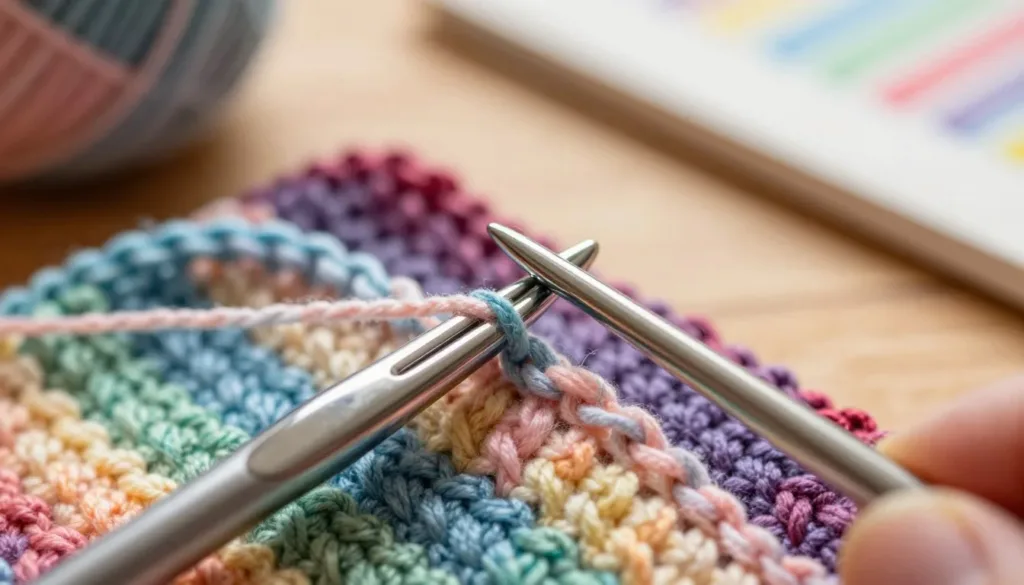
During each step, keep the loop-pull sequence smooth rather than tugging the yarn tight. Your hook should move through the bundle without catching or splitting the strands. A crochet puff is easier to control when you hold the base of the stitch between your fingers.
The chain 1 creates a second stitch at the top of the puff. On the next row, work into either the chain-1 part or the puff top, not both, or you may add an unwanted stitch.
The chain also gives you a clear place to secure the gathered loops. Some patterns omit it, so check the pattern before you finish each puff. If you want more help with basic chains and turning chains, the Crochet Guild of America’s basic crochet techniques explain common chain uses.
Count the loops before the final pull-through if the puff looks too small or bulky. That quick check can help you spot a missed repeat before it affects the row. Keep the closing chain snug enough to secure the puff without hiding its top.
Choosing a Loop Count
Choose the loop count your pattern specifies, because changing the number of partial stitches changes the puff’s density and size. A fuller crochet puff often uses more loops, while a small puff stitch crochet method can use fewer.
Keep the pattern’s stitch type and loop count together: a half double crochet and a double crochet build different puffs. These options show how patterns use partial stitches to create distinct sizes.
- A 7-loop puff uses 3 partial HDCs in the same stitch, then pulls through all 7 loops and finishes with chain 1.
- A 4-partial-HDC puff makes 9 loops before the final pull-through. This is a 4-repeat puff stitch crochet method using partial HDCs.
- A 5-HDC puff method builds 11 loops on the hook before pulling through them.
- A mini puff draws up a loop in the stitch, draws up another in the same stitch, then pulls through all 4 loops.
- A 3-partial-DC puff uses 3 partial double crochets in one stitch, then pulls through the 4 remaining loops.
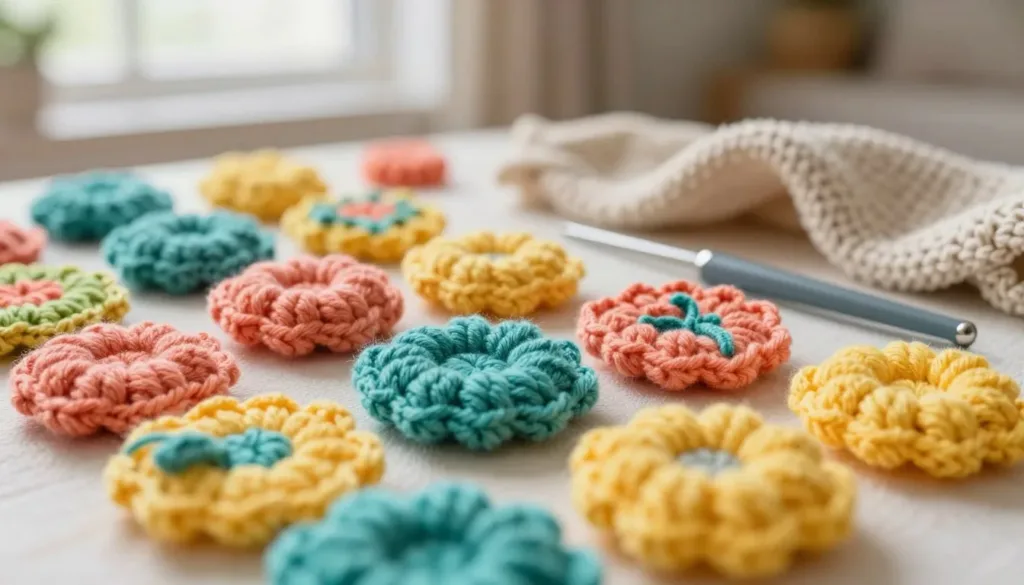
DC puff stitch crochet uses partial double crochets, while small puff stitch crochet can mean the mini-puff method. The terms can vary across crochet patterns, so use the stated stitch and count rather than relying on a name alone.
For mini puffs, begin with any number of chains plus 1 turning chain. Work mini puffs from the second chain across, then repeat the row across the fabric. A small swatch in #4 medium worsted-weight yarn with a 5mm hook measures 6 stitches by 7 rows in 2″ x 2″.
The example gauge gives you a starting point, not a rule for every yarn. Mini puffs work with any yarn, and a change in yarn weight changes the size of each puff. You can also try the flower crochet tutorial for ideas about how yarn and hook choices shape a project.
Each option has a different feel in the hand, so compare fabric rather than names alone. Some patterns call any repeated cluster a puff, even when its parts differ. Keep one loop-count method consistent across a swatch before judging its texture.
Shop Crochet Essentials
Explore useful tools, colorful yarn and books for your next project.
As an Amazon Associate, I earn from qualifying purchases.
Puff Stitch Rows: Stacked, Offset, and Aligned
The position of each puff in the next row determines whether the texture stacks vertically or shifts across the fabric. Puff stitch crochet patterns use chain spaces, stitch tops, or gaps to set that position.
For stacked puff stitch crochet rows, follow the row repeat closely. A small change at the edge can shift every puff above it.
- A stacked pattern can begin with an even-numbered chain. For its first row, double crochet in the second chain, then repeat skip 1 stitch, chain 1, and double crochet 1. Start the next row with chain 2, then work a puff in each chain-1 space with a skipped stitch between. Finish with a half treble crochet in the last double crochet, then alternate the two rows.
- An offset pattern can also begin with an even-numbered chain. Start with a puff in the fourth chain from the hook, then repeat skip 1 and puff 1. In later rows, place each puff in the gap between stitches.
- A vertically aligned pattern starts with an odd number of stitches. Work each puff into a chain space so the puffs stack above those in the previous row.
The stacked version alternates a base row with a puff row, while the offset version moves each puff into a gap. In one vertical method, make 3 loop-pull sequences in the same stitch, then pull through all 7 loops. When working a regular row with a 3-double-crochet puff, skip 2 stitches between puffs.
Check the pattern’s turning chain instructions before you begin a new row. Turning chains may count as stitches in some patterns, while others leave them outside the stitch count. The Crochet Guild of America explains turning chains and row basics for common crochet stitches.
Puff stitches show texture on both sides of the fabric. Several puff rows can create a herringbone-like effect, especially when their placement shifts across the row.
The edge repeat matters as much as the center of the fabric. Mark the first and last working spaces if you find it hard to see them among raised stitches. Keep the setup repeat consistent at the row edge so the next row’s first puff lands in the intended stitch or space.
Even Puffs and Blanket Projects
Even puffs come from loops pulled to the same height, a loose working rhythm, and yarn that does not split easily. Smooth yarn helps each raised stitch keep a clear outline.
Hold the puff base between your fingers while you work. That pinch gives you more control over the bundle without forcing your hook through it. A small shift in grip can make a big difference when the yarn catches.
Choose smooth yarn when you want puff stitches with clear edges; very fluffy fibers can hide their shape.
Use a smooth, non-splitting yarn and crochet loosely. Keep a steady rhythm as you build the stitch, and draw each loop to the same height. If a completed puff folds toward the back, gently push it toward the fabric’s front.
Very fluffy yarns, such as mohair, can make the raised texture less defined. Yarn weight also affects the puff’s size, so a change in yarn may alter the look and feel of your fabric. A swatch can help you check tension and gauge before you commit to a larger project.
One worsted-weight puff-stitch blanket uses a 6.00 mm J/10 hook and about 1300 yards of yarn. It measures about 32″ x 36″, and its pattern treats gauge as unimportant. For a custom width, start with a chain that is a multiple of 8 + 6; if you crochet loosely, the pattern recommends going down one hook size.
A second blanket uses #4-weight, 100% acrylic Lion Brand Pound of Love yarn. Each 16 oz skein has 1020 yards, and the pattern uses a 5 mm hook or the size needed to meet gauge. Its gauge is 12 stitches by 11 rows in 4″ x 4″.
The second blanket starts with a chain that is a multiple of 3 + 4. Its written sizes include lovey, stroller, receiving, baby, throw, twin, full/queen, and king. Unlike the first example, this pattern sets both a gauge and several blanket sizes.
These patterns show why a blanket’s starting chain and gauge must come from its own instructions. The first example gives a custom-width repeat but does not require a gauge match. The second provides a gauge for its listed sizes.
For a made-to-measure blanket, test the stated starting-chain multiple and gauge in a small swatch before committing to the full width.
Conclusion
A puff’s finished look depends on following its pattern repeat and keeping its loops even. The loop count sets the puff’s fullness, while its placement shapes the fabric across each row.
Choose the exact repeat you plan to use, then work a small sample before starting a larger project. That swatch can show whether the texture feels right and whether your row edges stay on track. You can also browse more beginner-friendly crochet projects for your next practice piece.
Make a small sample with the exact pattern repeat, then use its fabric to decide whether the texture and scale suit your project.
FAQ
Is a puff stitch the same as a bobble stitch?
Can you crochet puff stitches in the round?
Can puff stitches be worked without turning?
How much yarn do puff stitches use?
Why is it hard to pull the hook through all the puff loops?
Related Articles
- 12 Common Crochet Mistakes and How to Fix Them
- Learn to Crochet Flowers with This Simple How-To Guide


